TL;DR: which grant opportunities fit your profile?
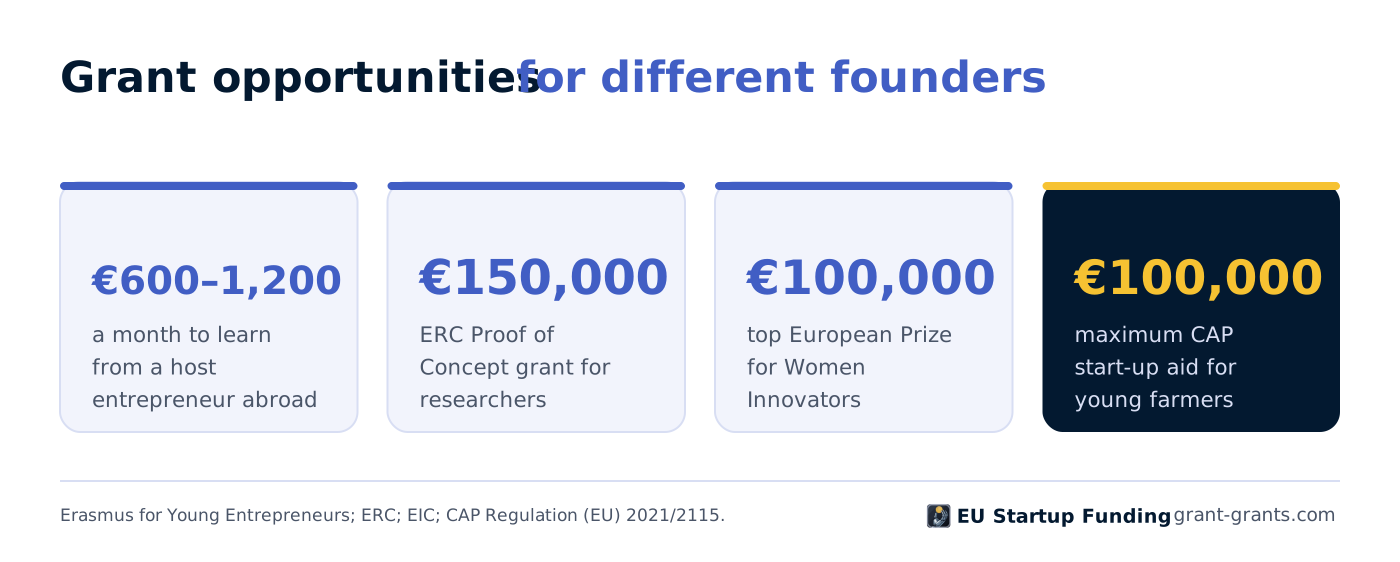
Many grants are designed for a specific kind of founder. Students and graduates can use Erasmus for Young Entrepreneurs (€600–1,200 a month abroad) or Germany's EXIST; researchers ERC Proof of Concept (€150,000) or EIC Transition; women Women TechEU (€75,000) and the European Prize for Women Innovators (up to €100,000, open until 1 December 2026); unemployed founders and career changers start-up allowances such as Germany's Gründungszuschuss or France's ARCE; rural founders LEADER and CAP start-up aid (up to €100,000); deep-tech founders the EIC Accelerator; and creative founders EIT Culture & Creativity (up to €30,000). Below: the grants for nine founder profiles, with amounts, eligibility and current status.
👉 See every deadline in our grant calendar
General grant lists bury the opportunities that fit you best. Many programmes are reserved for a specific group, such as researchers, women, young people, the unemployed or rural businesses, and those groups face less competition than open calls. Starting from your profile is the quickest way to a shortlist.
This guide lists grant opportunities for nine founder profiles, checked on official pages in October 2026. For the main grant in each country, see our startup grants hub; if you're applying alone, see applying for grants as a solo founder.
Grant opportunities at a glance
Grant opportunities by founder profile
1. Students and recent graduates
- Erasmus for Young Entrepreneurs: a one- to six-month stay with an experienced entrepreneur in another country, with a monthly grant of €600–1,200 depending on the country (for example €900 in Germany and Spain, €1,100 in Ireland), according to Erasmus for Young Entrepreneurs.
- EIT Jumpstarter: pre-acceleration and prizes of €10,000, €5,000 and €3,000 per cohort for teams from EIT RIS countries such as Italy, Spain, Poland and Portugal; the 2026 edition has closed.
- EXIST start-up grant (Germany): a 12-month stipend of €1,000 for students to €3,000 for PhD holders, plus material costs, for founders from universities, according to EXIST.
- StartUP Voucher (Portugal): €900 a month for up to 9 months for graduates aged up to 29 in three regions; the last call has closed.
2. Researchers and spin-offs
- ERC Proof of Concept: €150,000 over 18 months for holders of an ERC grant to test the market potential of their research.
- EIC Transition: up to €2.5 million to take research results towards the market, for single SMEs, spin-offs or universities, or small consortia.
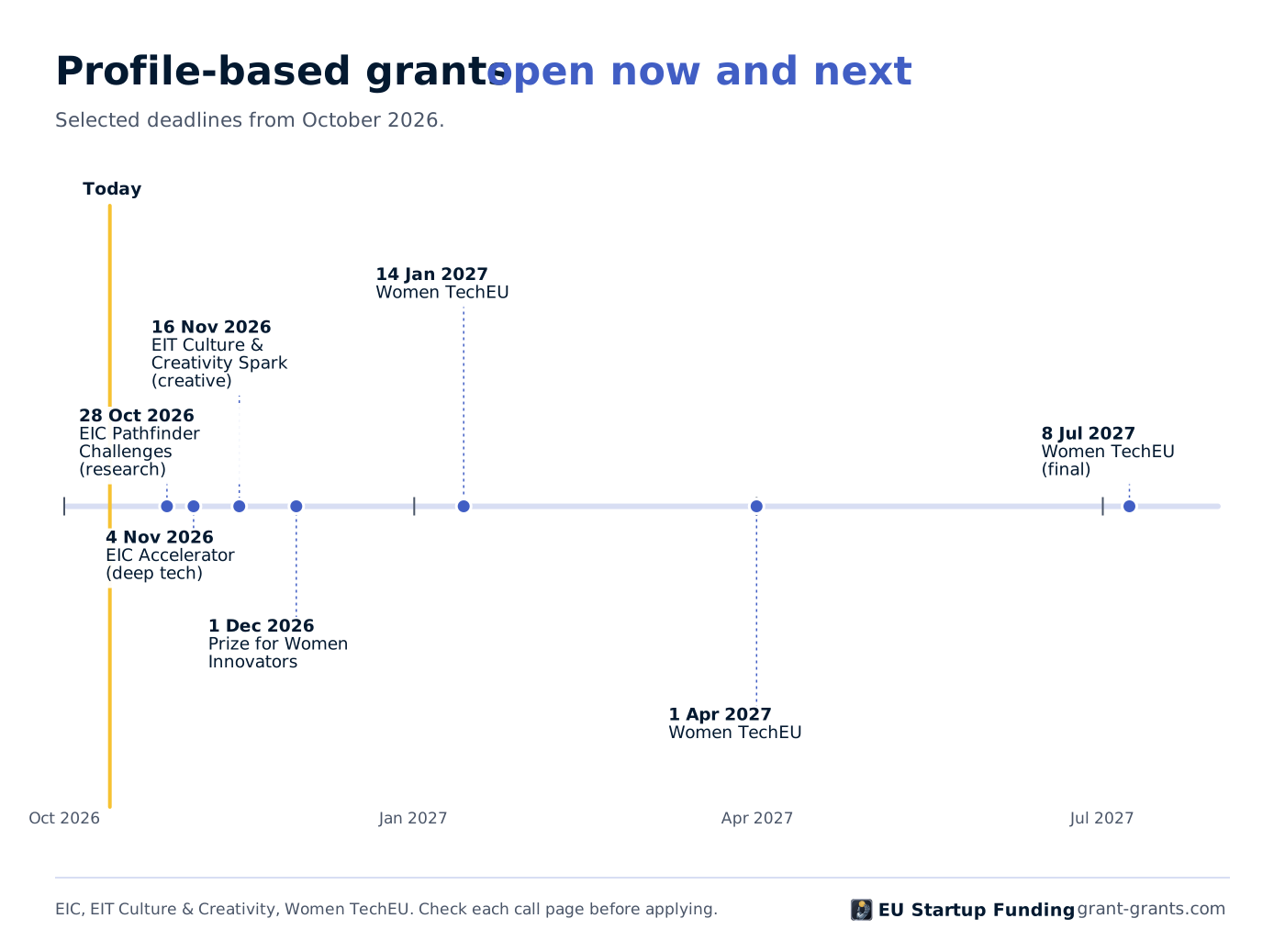
- EIC Pathfinder: up to €4 million for breakthrough research; the Challenges deadline is 28 October 2026.
- EXIST-Forschungstransfer (Germany): funding for research teams before founding a company, usually including up to €250,000 for materials, then up to €180,000 in a second phase.
3. Women founders
- Women TechEU: a €75,000 grant plus mentoring for women-led deep-tech startups; next full-proposal deadline 14 January 2027, according to Women TechEU.
- European Prize for Women Innovators: €100,000, €70,000 and €50,000 for women innovators, plus €50,000, €30,000 and €20,000 for Rising Innovators under 35; applications close on 1 December 2026, according to the EIC.
- NEOTEC Mujeres (Spain): €5 million of the 2026 NEOTEC budget was reserved for women-led technology companies.
- aws Preseed Deep Tech (Austria): a gender bonus raises funding from 80% to 90% and the cap from €267,000 to €300,000 when women hold more than 25% of the shares.
- EXIST Women (Germany): €2,000 for materials and an optional stipend for women at universities.
For all routes to money, see the funding playbook for female entrepreneurs and EU funding for women in deep tech.
4. Young founders
- Rising Innovators: the under-35 category of the European Prize for Women Innovators, with prizes up to €50,000.
- Start-Up Nation (Romania): grants of up to 250,000 lei for founders aged 18–29 after a free 40-hour course; enrolment opened on 6 October 2026.
- Resto al Sud 2.0 (Italy): a non-repayable voucher of up to €40,000 (up to €50,000 in some cases) and larger grants for founders aged 18–34 in southern Italy who are inactive or unemployed.
5. Unemployed founders and career changers
If you're receiving unemployment benefits, many countries let you turn them into start-up support, with no age limit, which makes these routes especially useful for founders over 50:
- Germany, Gründungszuschuss: your last unemployment benefit plus €300 a month for six months, then €300 a month for nine more months if approved; you need at least 150 days of benefit left, according to the Federal Employment Agency.
- France, ARCE: 60% of your remaining unemployment rights paid as capital in two instalments.
- Spain, pago único: your remaining unemployment benefit paid as a lump sum to start a business.
- Netherlands, Bbz: income support and a business loan for people starting from social assistance or unemployment benefits.
For ideas, see our sister guide to business ideas for women over 50.
6. Impact and social entrepreneurs
The European Social Innovation Competition awarded €75,000, €50,000 and €25,000 in its 2024 edition, but no 2025 or 2026 edition has been announced. EU social economy money, such as the ESF+ inclusive incubation call, mostly goes to incubators and intermediaries, so look for incubators funded by it. See social innovation and impact grants.
7. Rural and farming founders
- LEADER: at least 5% of each country's rural development (EAFRD) budget is reserved for LEADER, which funds local projects and businesses through Local Action Groups; find yours through the EU CAP Network.
- CAP start-up aid: young farmers, new farmers and rural business start-ups can receive up to €100,000 under national CAP strategic plans; the age limit for young farmers is set nationally between 35 and 40.
- EIP-AGRI Operational Groups: innovation projects funded through national CAP plans.
8. Deep-tech founders
- EIC Accelerator: a grant under €2.5 million plus €1–10 million of equity for breakthrough innovations at technology readiness levels 6–8; the next full-proposal cut-off is 4 November 2026, according to the European Innovation Council.
- Bourse French Tech Emergence (France): up to €90,000 for deep-tech companies under one year old.
- aws Preseed Deep Tech (Austria): up to €267,000 at 80%, applications on a rolling basis.
9. Creative and cultural founders
- EIT Culture & Creativity Spark: up to €30,000 per venture concept in fashion, architecture and advanced materials; open until 16 November 2026, according to EIT Culture & Creativity.
- Creative Europe Innovation Lab: funding for organisations combining audiovisual with other creative sectors; the 2026 call has closed.
How to use your profile to find grants
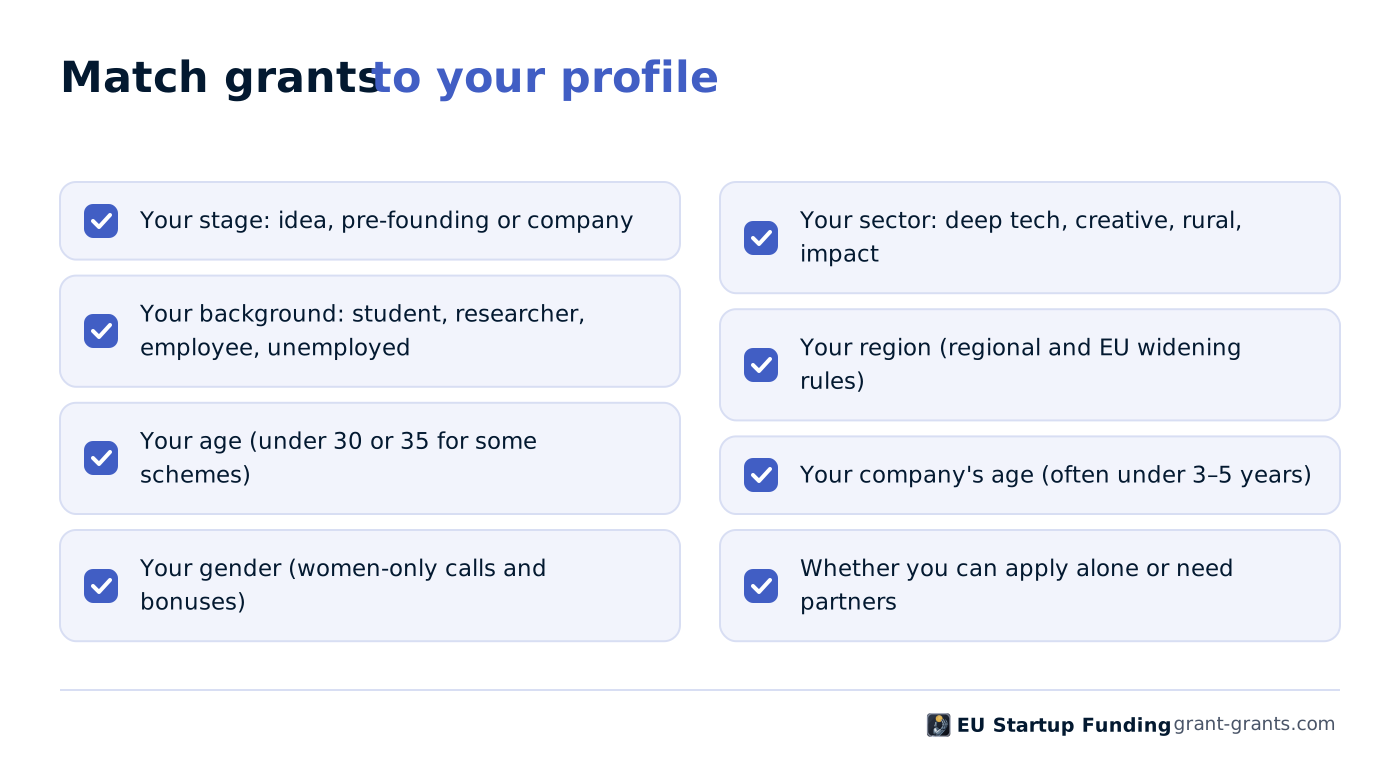
- List every profile that fits you: you may be a woman, a researcher and a deep-tech founder at once, each opening different calls.
- Start with the most specific calls, where competition is smaller, then add open calls.
- Check your benefit rights before quitting a job: unemployment-based start-up support often needs an existing claim.
- Set alerts in the official databases; see our grant finder.
- Check the odds and effort of each programme; see which European grants are worth it.
Not sure which profile fits your idea?
The Fe/male Switch startup game helps you shape your idea, test it with customers and build the plan grants ask for, with an AI co-founder at each step.
👉 Start the game
Conclusion: start from who you are
The best grant opportunities are often the ones designed for people like you: students and graduates, researchers, women, young founders, people starting from unemployment, rural and creative entrepreneurs, and deep-tech teams. They're smaller and more targeted than open calls, and the competition is narrower. List the profiles that fit you, shortlist two or three programmes, and note the deadlines, starting with the Prize for Women Innovators on 1 December and Women TechEU on 14 January.
FAQ: grant opportunities by profile
Are there grants for students who want to start a business?
Yes: Erasmus for Young Entrepreneurs funds stays with host entrepreneurs abroad (€600–1,200 a month), EIT Jumpstarter offers prizes for teams from many EU countries, and Germany's EXIST pays students and graduates a stipend for a year.
What grants are available for women entrepreneurs?
Women TechEU (€75,000 for women-led deep tech), the European Prize for Women Innovators (up to €100,000), NEOTEC Mujeres in Spain, Austria's aws gender bonus and EXIST Women in Germany.
Can I get a grant to start a business if I'm unemployed?
Often yes: Germany's Gründungszuschuss, France's ARCE, Spain's pago único and the Dutch Bbz turn unemployment or social benefits into start-up support.
Are there grants for founders over 50?
There are few age-specific grants, but most programmes have no upper age limit, and unemployment-based start-up support is open to older founders.
What grants exist for researchers who want to commercialise research?
ERC Proof of Concept (€150,000 for ERC grant holders), EIC Transition (up to €2.5 million), EIC Pathfinder and national programmes such as EXIST-Forschungstransfer.
Are there grants for rural businesses?
Yes: LEADER funds local projects through Local Action Groups, and CAP strategic plans offer start-up aid of up to €100,000 for young and new farmers and rural businesses.
Which grants are for young entrepreneurs?
Erasmus for Young Entrepreneurs, the Rising Innovators prize (under 35), Romania's Start-Up Nation (18–29) and Italy's Resto al Sud 2.0 (18–34).
Where do I find grants for creative businesses?
EIT Culture & Creativity runs calls such as Spark (up to €30,000), and Creative Europe funds cross-sector innovation projects.
