TL;DR: can a solo founder apply for grants?
Yes, more often than people think. In EU grant rules a "legal entity" includes natural persons, and several programmes accept one applicant: the EIC Accelerator (even individuals who will set up a company before signing), EIC Pathfinder Challenges, cascade calls such as NGI Zero (individuals can apply for €5,000–50,000) and many national schemes, from Germany's EXIST to Austria's aws Preseed. Standard Horizon Europe projects need three partners from three countries, Eurostars two. Evaluators will check your capacity and team, and a proposal takes 36–45 person-days, so choose carefully. Below: what you can apply for alone, what evaluators check, and how to make it manageable.
👉 Find the main startup grant in your country
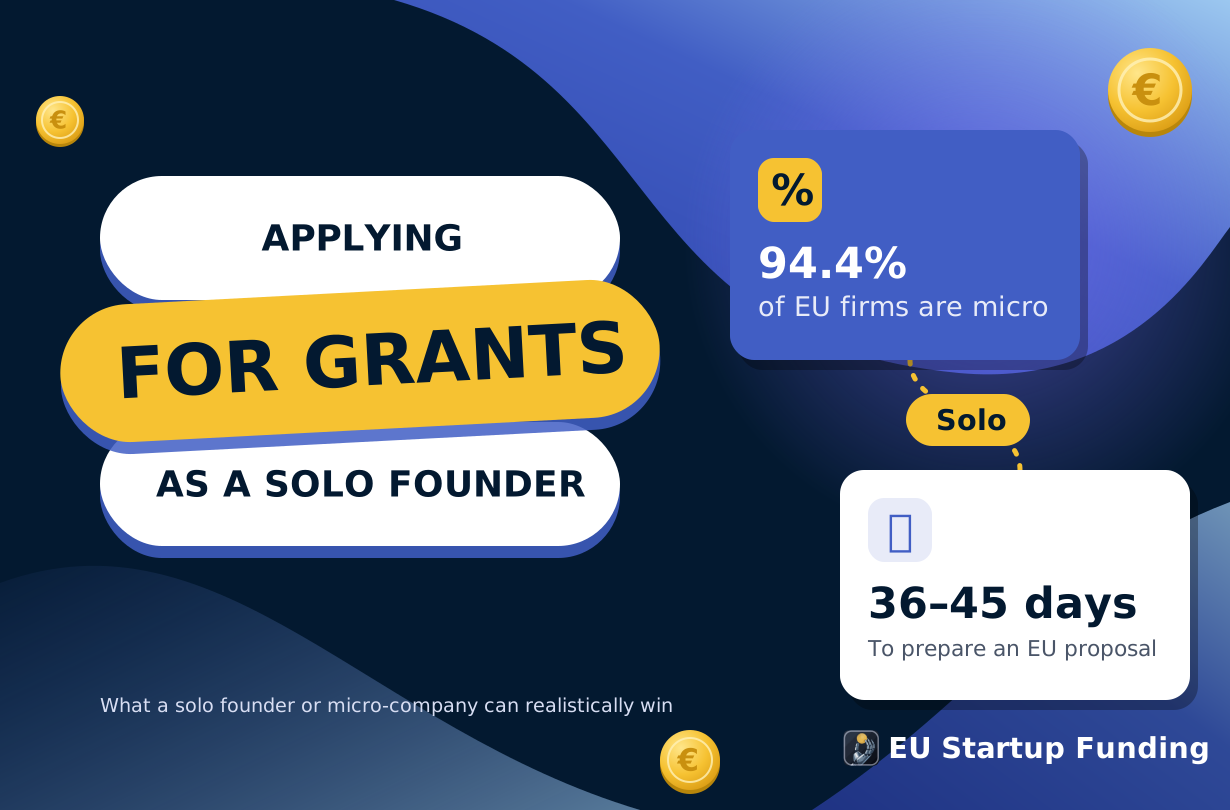
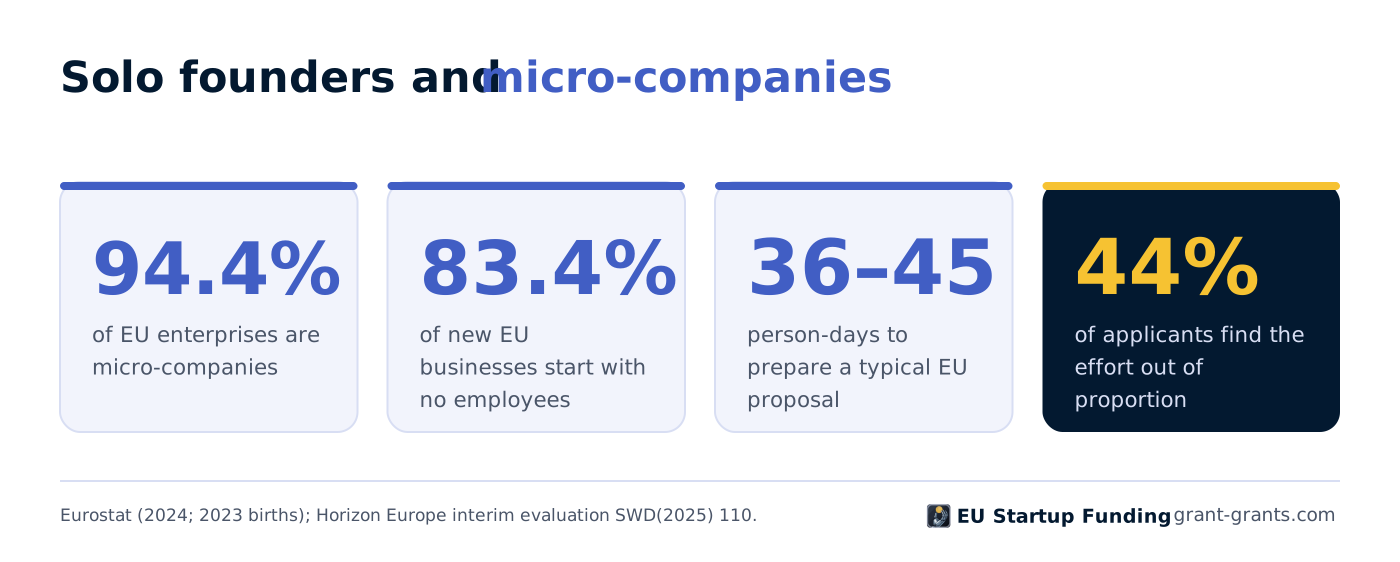
Most grant advice assumes a company with staff, a finance team and a research partner. But 94.4% of EU enterprises are micro-companies with fewer than ten people, and 83.4% of new businesses start with no employees at all, according to Eurostat. If that's you, the question isn't how to write the perfect proposal; it's which grants you can apply for at all, and which are worth your limited time.
This guide is for solo founders, freelancers and micro-companies. For the general process, see our grant application process guide; for the eligibility basics, startup eligibility for European grants.
Can a solo founder or micro-company apply for EU grants?
Often, yes. A micro-enterprise has fewer than 10 staff and a turnover or balance sheet of up to €2 million, according to the EU's SME definition. In EU grant rules, a "legal entity" means any natural or legal person, so individuals can apply wherever a call allows it. What usually stops solo applicants isn't size but the consortium rule.
National grants that welcome solo founders
Germany's EXIST start-up grant is one of the most solo-friendly: it pays a stipend of €1,000–3,000 a month for a year and explicitly allows single founders. For the main grant in every EU country, see our startup grants hub.
What evaluators check when you're small
- Financial capacity: in Horizon Europe it's normally checked only for coordinators requesting €500,000 or more, and never for grants of €60,000 or less, according to the Horizon Europe general annexes. If your finances look weak, the agency can reduce or stage your prefinancing instead of rejecting you.
- Operational capacity: evaluators assess whether you and your team have the skills to deliver, or credible measures to get them.
- Team in the EIC Accelerator: team capability is scored separately, with a threshold of 4 out of 5 at full proposal, and evaluators look at skills gaps and your plan to fill them, according to the EIC.
- The three-strike rule: after three unsuccessful EIC Accelerator submissions, you can't apply again under Horizon Europe, so don't use your attempts too early.
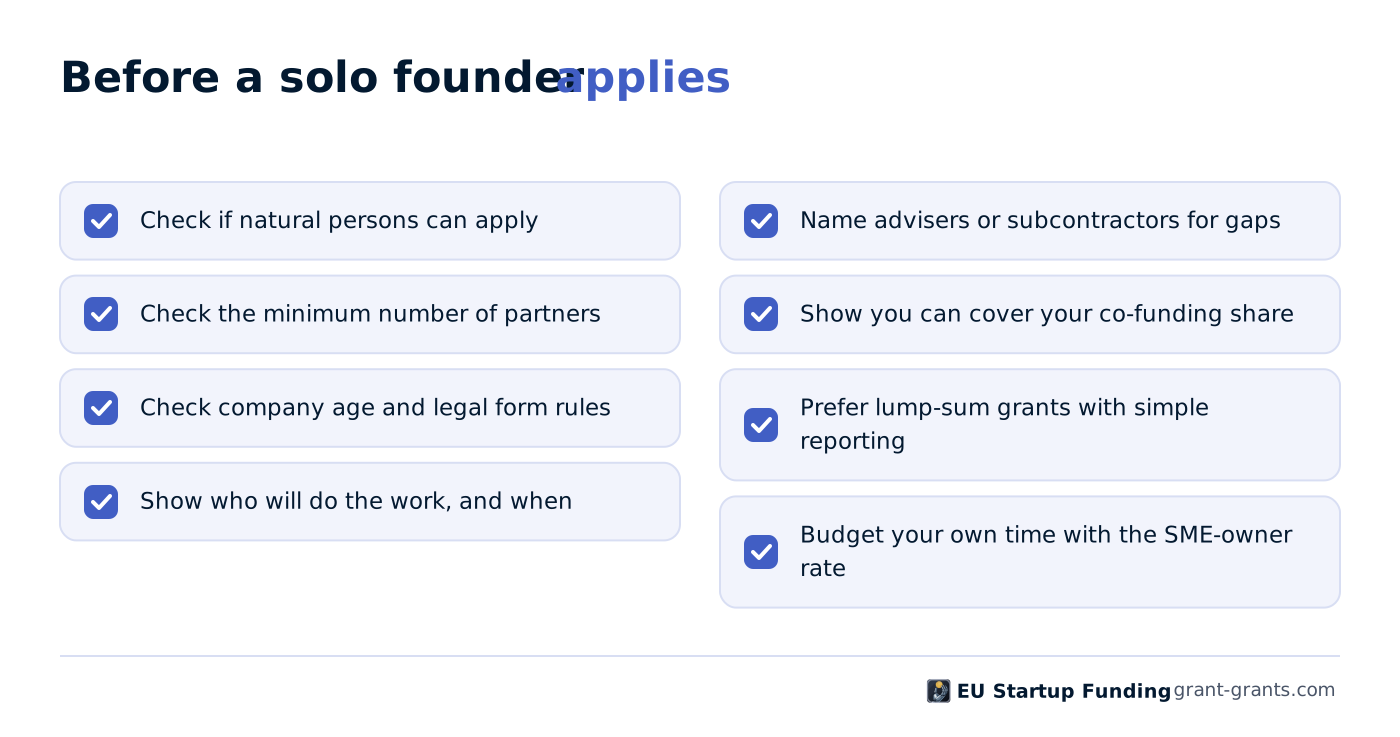
A solo founder can still score well on team: name your advisers, subcontractors and planned hires, and explain when each will start. See key personnel and role descriptions.
The real cost: your time
The median Horizon Europe coordinator spends 36–45 person-days preparing a proposal, and so do single applicants to programmes like the EIC Accelerator; 26% of EIC Accelerator applicants, and 43% of successful ones, spent more than 65 person-days, according to the Commission's interim evaluation. 44% of applicants found the costs disproportionate to their chances. For a solo founder, that's two months without building, selling or earning.
So pick grants where the amount and odds justify the effort; see which European grants are worth applying for. Templates, AI tools and a good consultant can cut the time; see grant coaching and consultants and AI tools for solo founders.
Grants that are easier to manage alone
- Lump-sum grants: you're paid for completing work packages, not for documented costs, so there's no cost reporting and no audits of actual costs, according to the Commission's lump-sum guidance. The EIC Accelerator grant is a lump sum. See cost reimbursement versus lump sums.
- The SME-owner rate: if you don't pay yourself a salary, Horizon Europe lets you charge your own time at a fixed daily rate of €485.86 multiplied by your country's coefficient, for up to 215 days a year, under the Annotated Grant Agreement. See personnel cost calculation.
- Cascade grants: small, short applications and quick decisions; see cascade funding and sub-grants.
A realistic grant path for a solo founder
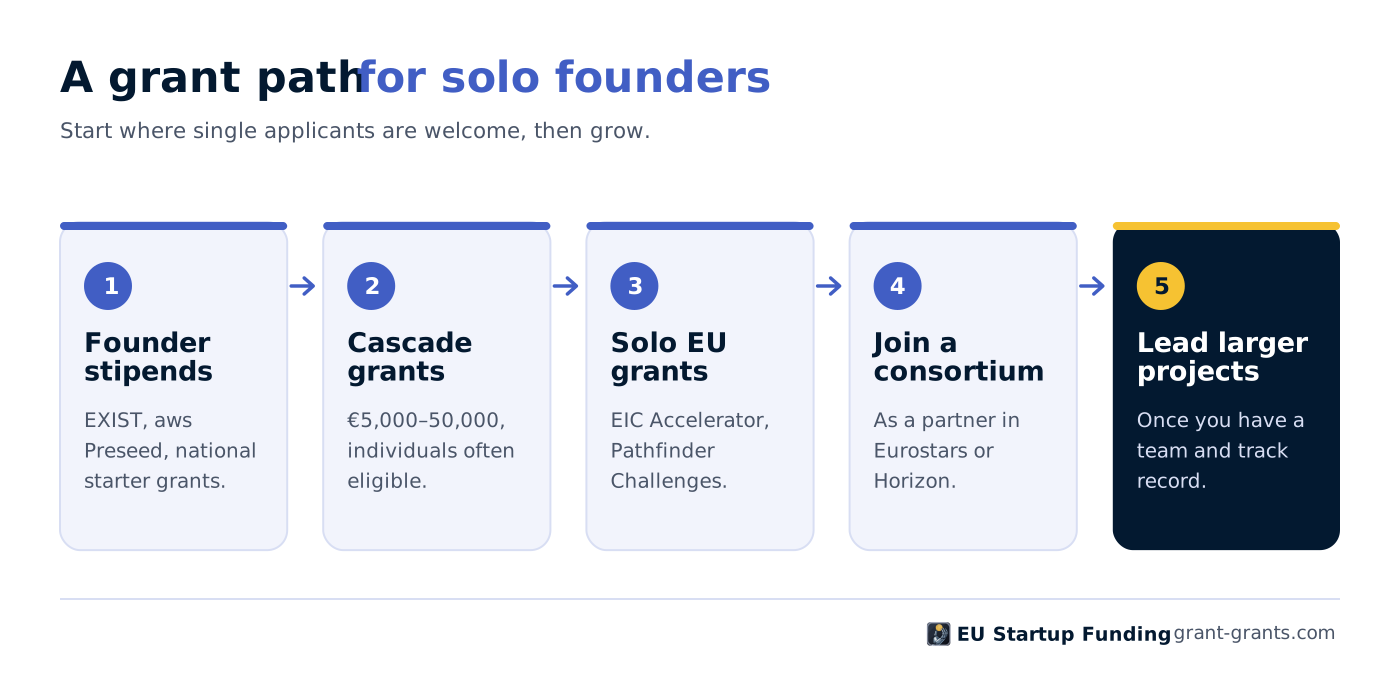
- Start with founder grants and stipends in your country, which are designed for people like you.
- Add cascade grants for specific technical work.
- Apply for single-company EU grants such as the EIC Accelerator once you have traction and a team plan.
- Join consortia as a partner to access Horizon Europe and Eurostars without leading them; see consortium requirements.
- Lead larger projects once you have staff and a track record.
Build the application material once, reuse it everywhere
The Fe/male Switch startup game helps solo founders build the business plan, market analysis and pitch that grant applications ask for, with an AI co-founder doing part of the work.
👉 Start the game
Conclusion: you can apply alone, if you choose well
Being a solo founder doesn't rule you out of grants. The EIC Accelerator, Pathfinder Challenges, cascade calls and many national schemes accept single applicants, and natural persons count as legal entities in EU rules. What you need is a realistic choice of programmes, a credible plan for the skills you lack, and protection for your time: start with founder grants and cascade calls, use lump sums and the SME-owner rate, and join consortia as a partner before trying to lead them.
FAQ: applying for grants as a solo founder
Can an individual apply for an EU grant?
Yes, where the call allows it: EU rules count natural persons as legal entities. Individuals can apply to the EIC Accelerator if they set up a company before signing, to EIC Pathfinder Challenges and to cascade calls such as NGI Zero.
Can a one-person company get an EU grant?
Yes. Single companies can apply to the EIC Accelerator, EIC Pathfinder Challenges, Women TechEU and many national schemes. Standard Horizon Europe collaborative projects need three partners from three countries.
Which grants are best for solo founders?
National founder grants such as Germany's EXIST and Austria's aws Preseed, cascade calls (€5,000–50,000), and, once you have traction, the EIC Accelerator.
Will my small company fail the financial capacity check?
Horizon Europe normally checks financial capacity only for coordinators requesting €500,000 or more, and never for grants of €60,000 or less. Weak finances can mean staged prefinancing rather than rejection.
How long does it take to write a grant application?
The median for a Horizon Europe coordinator or EIC Accelerator applicant is 36–45 person-days; many EIC applicants spend more than 65.
Can I pay myself from a grant if I have no salary?
In Horizon Europe, yes: SME owners without a salary can charge their time at a fixed daily rate (€485.86 times a country coefficient) for up to 215 days a year.
What is the EIC three-strike rule?
After three unsuccessful submissions to the EIC Accelerator, a company can't apply again under Horizon Europe.
Do I need a company to apply for a grant?
Not always: EXIST, aws Preseed, Start-Up Nation and cascade calls fund individuals or founders before incorporation; others require a registered company.
