TL;DR: what European funding is there besides grants?
Much more money than grants, mostly as loans, guarantees and equity. The EIB Group signed a record €100 billion in 2025 and runs a €70 billion TechEU programme for innovative companies; the EU's InvestEU guarantee (€26.2 billion) backs loans and funds through local banks; and every EU country has a promotional bank, from Germany's KfW and France's Bpifrance to Spain's ENISA and Finland's Finnvera. Startups rarely deal with the EU directly: you reach this money through national banks and funds. Below: the EU layer, a 27-country map of national promotional banks and how to find EU-backed lenders near you.
👉 Compare with the main startup grant in each country
When founders search for European funding, they usually mean grants. But grants are only a small part of the public money available to companies in Europe. Far more flows as loans, guarantees and equity from the European Investment Bank Group, the EU budget and national promotional banks, often on better terms than a commercial bank would offer, and usually without giving up shares.
This guide maps that money: what the EU offers, what each country's promotional bank offers startups and SMEs, and how to reach it. For the basics of debt, see bank loans and debt financing for startups; for grant alternatives, see startup funding alternatives.
Why loans, guarantees and equity matter
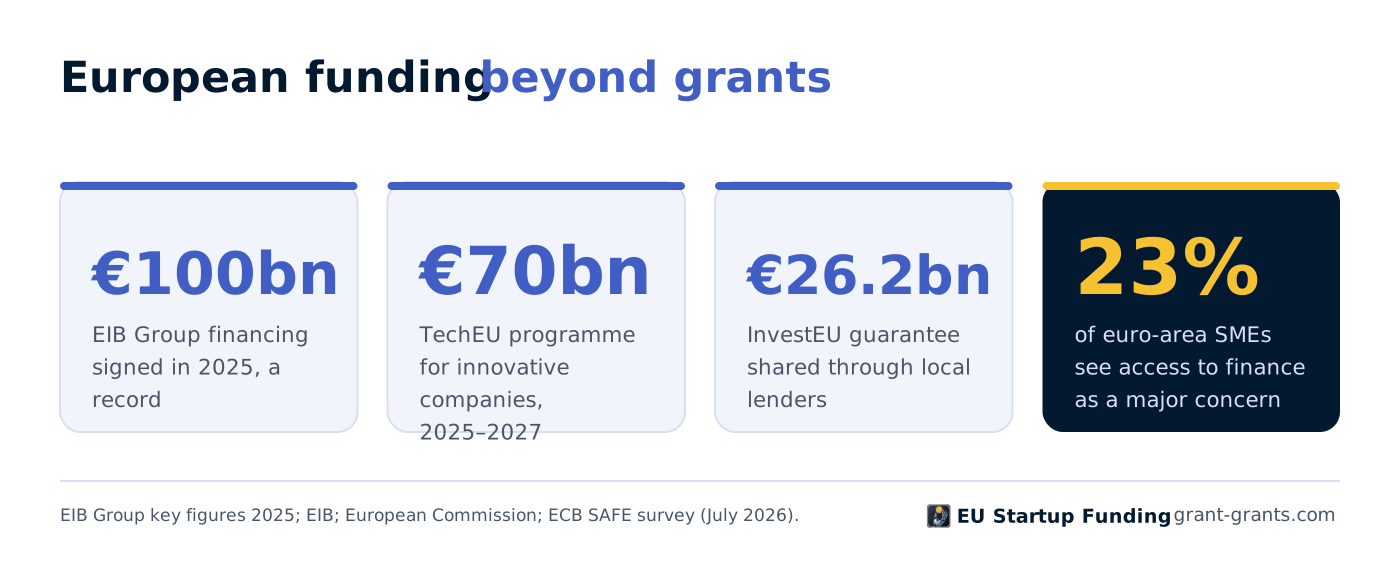
Grants are small, slow and competitive; most companies also need loans or investment to grow. About one in four small and medium-sized companies in the euro area (23%) saw access to finance as a major concern in mid-2026, and the gap between SMEs' need for bank loans and their availability widened, according to the ECB's survey on the access to finance of enterprises. Costs and competition worried firms more, but for young companies without collateral, finance is often the hardest step.
Public lenders close that gap in three ways: guarantees that let a bank lend without collateral, direct loans on soft terms, and equity through funds. See equity dilution versus grants for the trade-offs. For tax credits, vouchers and public procurement, see funding opportunities beyond grants and loans.
The EU layer: EIB Group, InvestEU and the EIC
European Investment Bank Group
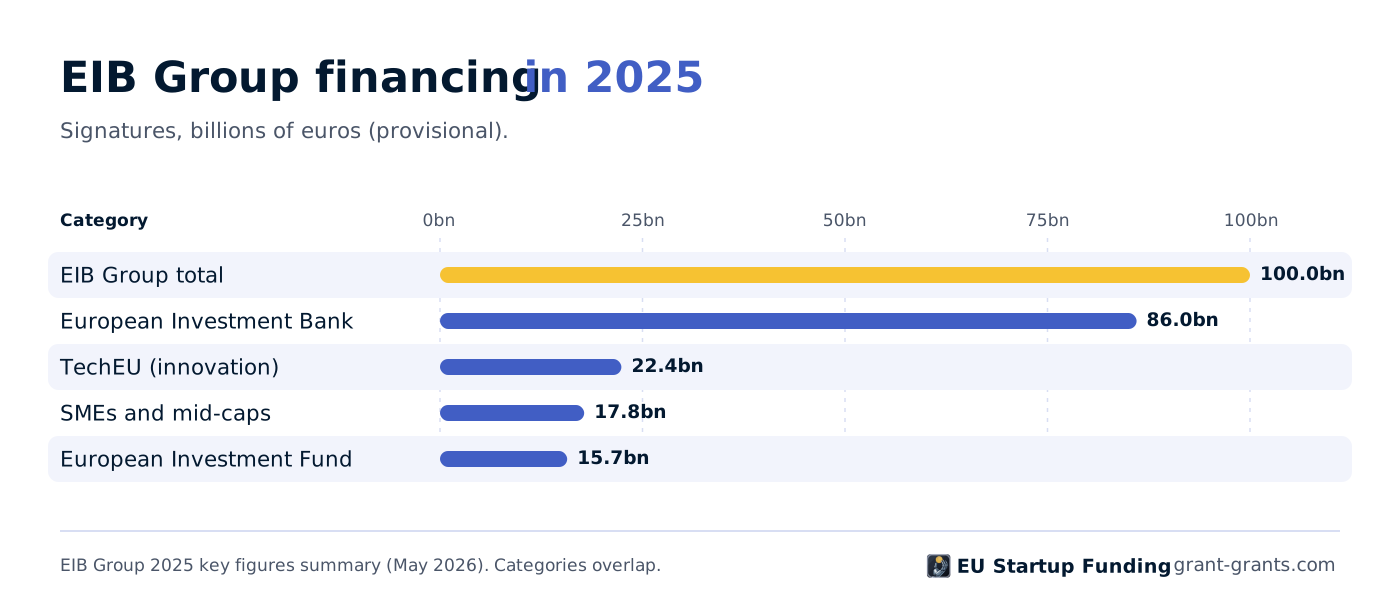
The EIB Group, made up of the European Investment Bank and the European Investment Fund (EIF), signed a record €100 billion of financing in 2025, including €17.8 billion for SMEs and mid-caps and €22.4 billion under TechEU, according to its 2025 key figures. The EIF, which works through banks and funds rather than directly with companies, committed €15.7 billion, about €7.1 billion of it as equity and €8.6 billion as guarantees.
- TechEU: €70 billion of EIB Group equity, quasi-equity, loans and guarantees for innovative companies in 2025–2027, aiming to mobilise at least €250 billion, in cleantech, health, digital and AI, defence, space and critical raw materials. A TechEU platform helps companies check which product fits.
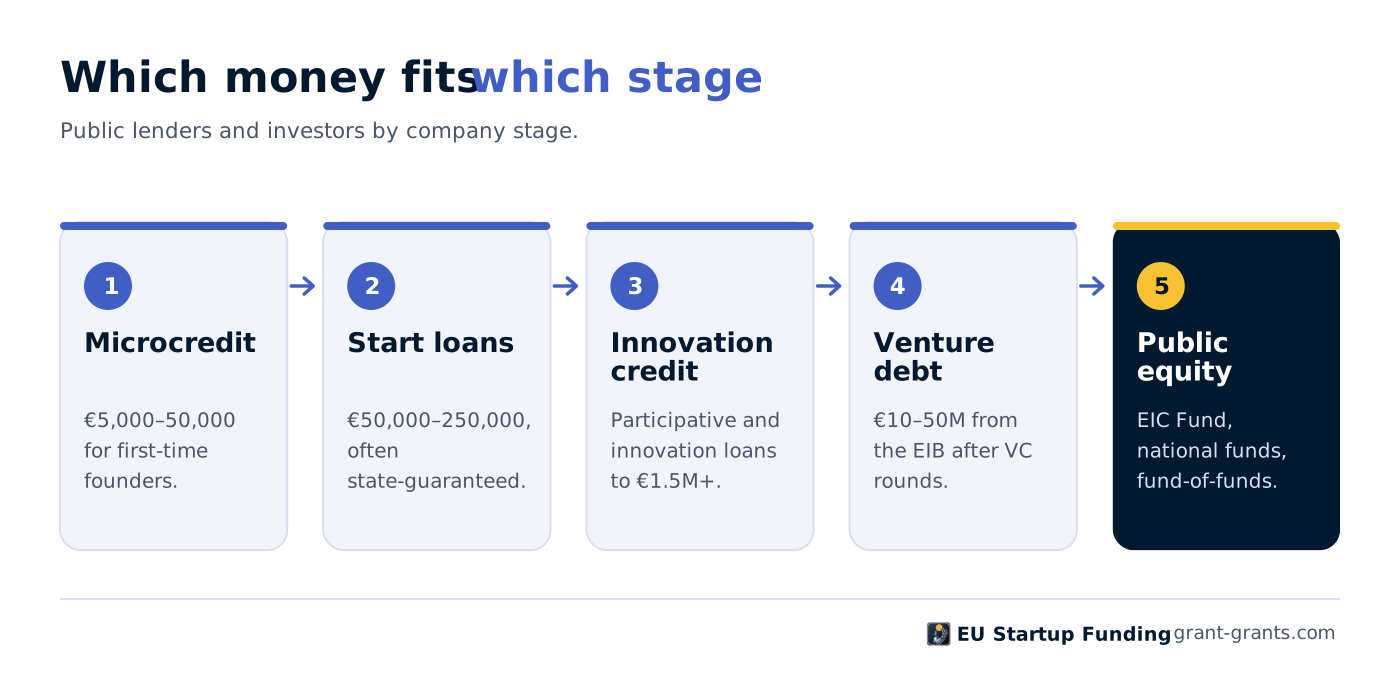
- Venture debt: typically €10–50 million, for innovative SMEs and mid-caps that have already raised equity from professional investors and do R&D in the EU, according to the EIB.
- European Tech Champions Initiative: a €3.75 billion fund-of-funds backed by Germany, France, Spain, Italy, Belgium and the EIB Group, for funds that invest in companies raising more than €50 million.
- ESCALAR: EIF structured equity in scale-up funds; fund managers apply, not companies.
InvestEU
InvestEU puts a €26.2 billion EU budget guarantee behind loans, guarantees and funds, expected to mobilise at least €372 billion over 2021–2027, according to the European Commission. In June 2026 the Commission and the EIB Group added €22 billion of support expected to reach more than 130,000 SMEs. Companies never apply to InvestEU directly: they borrow from a bank, promotional bank or fund that uses the guarantee. See our guide to InvestEU loan guarantees.
EIC Fund and Scaleup Europe Fund
The EIC Fund invests €1–10 million of equity alongside EIC Accelerator grants; it has signed more than €1.4 billion in over 300 companies. For larger rounds, STEP Scale Up invests €10–30 million, and the new Scaleup Europe Fund targets €5 billion for rounds of €100 million and more; see new grants and funding in 2026.
How to find EU-backed lenders near you
The EU's Your Europe access-to-finance tool lets you choose your country and search more than 1,000 financial institutions offering EU-backed loans, microfinance and venture capital. It's the quickest way to find which local bank or fund uses an EU guarantee, often with lower collateral requirements.
National promotional banks: a 27-country map
Every EU country has public lenders for companies. These are their flagship products for startups and SMEs in 2026:
Two examples of how national products work: Germany's ERP-Gründerkredit StartGeld lends up to €200,000 through your bank, with KfW carrying 80% of the risk, and Spain's ENISA participative loans of €25,000–1.5 million need no guarantees and are repaid partly in line with profits. Terms change often; confirm with each institution.
How to use promotional bank money well
- Start with your own bank, and ask which public guarantees it can use; most promotional loans go through commercial banks.
- Combine with grants. A grant can count towards the own funds a lender wants to see; see match funding requirements.
- Prepare a credible plan. Lenders want cash-flow forecasts and evidence you can repay; see how to negotiate debt funding.
- Use equity funds for fast growth. National fund-of-funds such as KfW Capital, Bpifrance, CDP Venture Capital and PFR Ventures back VC funds that invest in startups.
- Ask about support for women founders, such as France's Garantie Égalité Femmes; see the funding playbook for female entrepreneurs.
For an overview of all routes, see the European startup funding landscape and our European startup funding guide.
Build the plan lenders want to see
The Fe/male Switch startup game guides you through the business plan, financial forecast and pitch, with an AI co-founder at each step.
👉 Start the game
Conclusion: grants are the tip of the iceberg
European funding for companies is dominated not by grants but by loans, guarantees and equity: €100 billion from the EIB Group in 2025 alone, a €26.2 billion InvestEU guarantee and a promotional bank in every country. For most startups the path runs through a local bank or national institution: a start loan with a public guarantee, a participative or innovation loan, then public-backed equity funds. Use the EU's finder tool, talk to your bank about guarantees, and combine loans with grants to keep your equity.
FAQ: European funding beyond grants
What European funding is available for startups besides grants?
Loans, guarantees and equity from the EIB Group, InvestEU-backed banks and funds, the EIC Fund and national promotional banks such as KfW, Bpifrance, ENISA, Finnvera and Almi.
Can a startup borrow directly from the EIB?
Only for large amounts: EIB venture debt is typically €10–50 million for companies that have already raised professional equity. Smaller companies reach EIB Group money through local banks and funds.
What is InvestEU?
An EU programme that puts a €26.2 billion budget guarantee behind loans, guarantees and funds offered by banks and investors. Companies apply to those intermediaries, not to the EU.
How do I find EU-backed loans in my country?
Use the Your Europe access-to-finance tool, which lists more than 1,000 institutions offering EU-backed loans, microfinance and venture capital by country.
What is a national promotional bank?
A publicly owned bank or agency that supports the economy with loans, guarantees and equity, such as KfW in Germany, Bpifrance in France or ENISA and ICO in Spain.
Do I need collateral for a startup loan?
Often less than usual: public guarantees cover up to 80% of many startup loans, and some products, such as ENISA's participative loans, need no guarantees.
What is TechEU?
An EIB Group programme providing €70 billion of equity, loans and guarantees to innovative companies in 2025–2027, aiming to mobilise €250 billion.
Can I combine loans and grants?
Yes, usually. A grant can strengthen your own funds for a loan, as long as you respect state aid limits and don't fund the same costs twice.
