TL;DR: what funding opportunities are there besides grants?
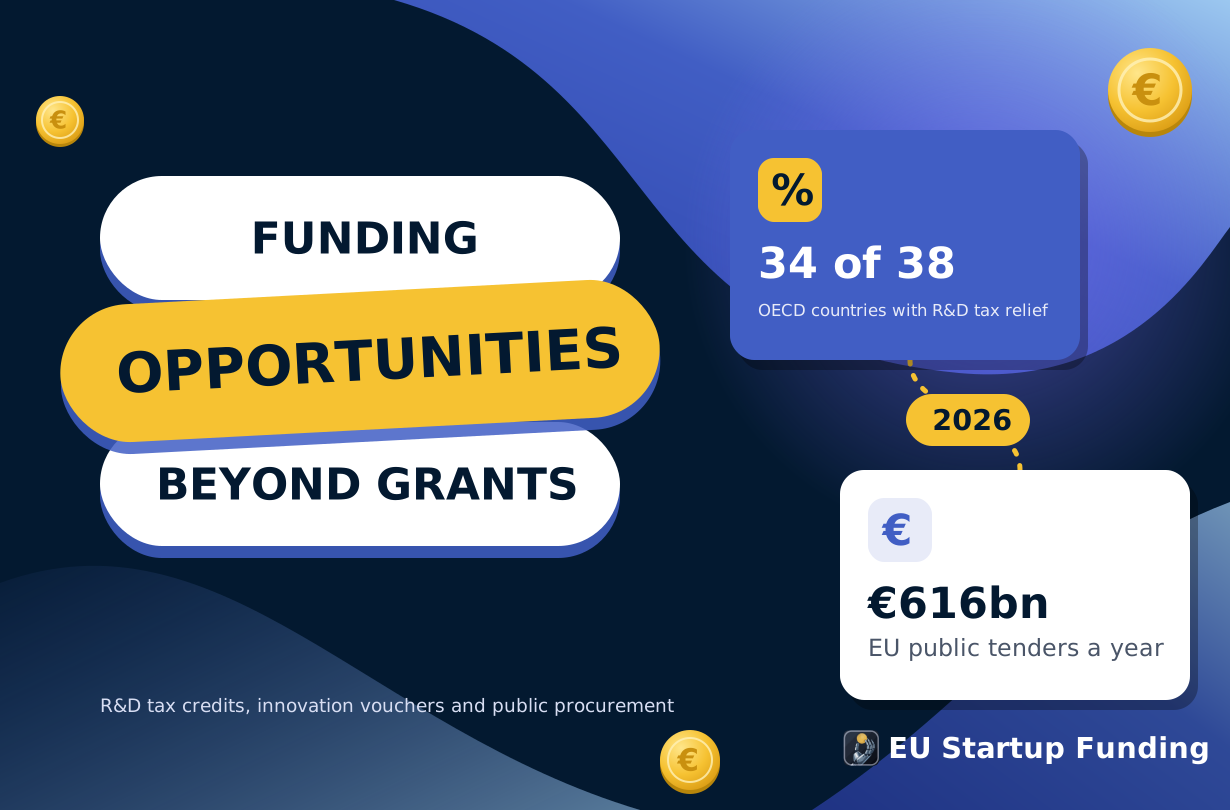
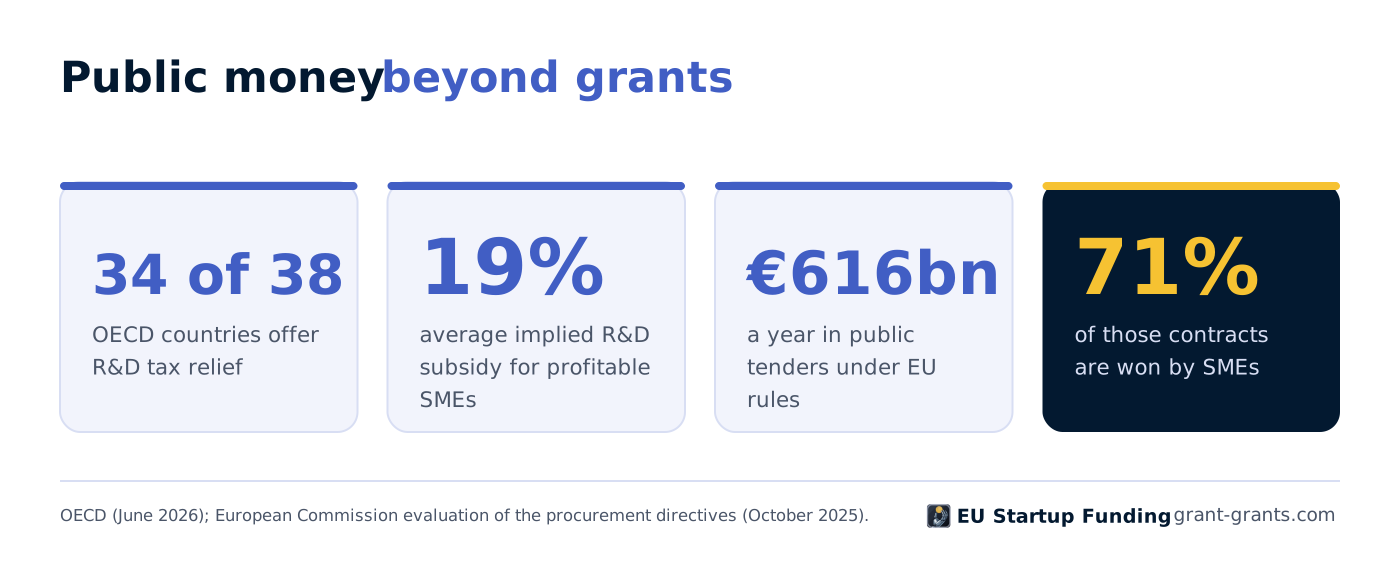
Three big ones that most founders overlook. R&D tax incentives: 34 of 38 OECD countries offer them, worth about 19% of R&D spending for profitable SMEs on average, from France's 30% CIR to Germany's 35% for SMEs and the Dutch WBSO. Innovation vouchers: €5,000–25,000 to buy expertise from a lab. And public procurement: €616 billion a year of EU tenders, 71% of them won by SMEs, plus special innovation procurement that pays companies to develop new solutions. Below: the 2026 rules country by country, how to use them and how to combine them with grants.
👉 Compare with the main startup grant in each EU country
Grants get most of the attention, but they are competitive, slow and limited. Governments support innovative companies in several other ways that are often easier to access: tax relief on research spending, small vouchers for expert help, and buying from startups as customers. Many founders never use them because they don't know they exist or think they're only for large companies.
This guide covers the funding opportunities beyond grants that matter most for startups and SMEs in Europe in 2026. For other alternatives such as crowdfunding and revenue-based financing, see startup funding alternatives; for public loans and equity, see European funding beyond grants.
R&D tax incentives: the biggest source most startups ignore
In 2025, 34 of the 38 OECD countries offered tax relief for business R&D, and tax incentives made up 60% of all government support for business R&D, according to the OECD. For a profitable SME the average implied subsidy was 19% of R&D spending, and 17% for a loss-making one. Unlike grants, most tax incentives aren't competitive: if your work qualifies as R&D, you can claim.
Three schemes worth knowing in detail
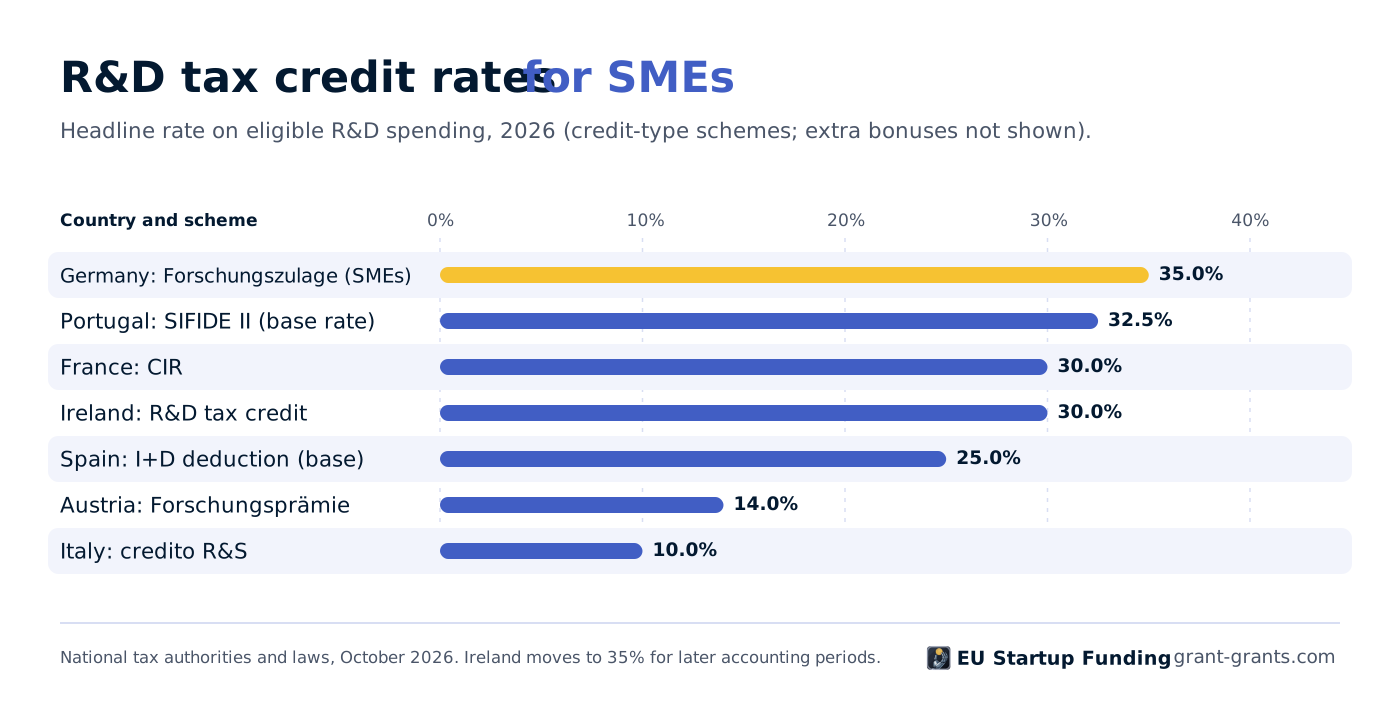
- France: the CIR covers 30% of R&D spending up to €100 million, according to Service-Public.fr. Young innovative companies (JEI) spending at least 20% on R&D also get social-charge exemptions, and since 2024 investors in "breakthrough" JEIs can deduct 50% of their investment from income tax.
- Germany: the Forschungszulage pays 25% of eligible R&D costs, 35% for SMEs, and from 2026 the cost base rises to €12 million, according to the research allowance law, so an SME can receive up to €4.2 million a year.
- Netherlands: the WBSO reduces wage tax by 36% on the first €391,020 of R&D wage costs in 2026, or 50% for starters, according to RVO. See our Netherlands WBSO and RVO guide.
Check whether a scheme pays out when you make a loss. Austria's research premium is paid in cash even to loss-making companies, and Denmark pays out the tax value of R&D losses. For most startups, that cash matters more than a deduction they can only use years later.
Innovation vouchers: small, fast and simple
Innovation vouchers pay for expert help, usually from a university or research centre, to test an idea, design a prototype or solve a technical problem. They're small, but applications are short and decisions quick.
Vouchers are a good first step before a bigger grant: a voucher-funded feasibility study can become the evidence for your next application.
Public procurement: governments as your customer
Public buyers are among the biggest customers in Europe: public procurement accounts for around 15% of GDP, and the EU rules cover an average of €616 billion of contracts a year, 71% of which are won by SMEs, according to the Commission's evaluation of the procurement directives. Unlike grants, a contract pays for what you deliver, and a public reference helps you sell to others.
Contracts above these values must be advertised EU-wide; below them, national rules apply and procedures are often simpler, which suits small companies, according to the European Commission. In September 2026 the Commission proposed a single Public Procurement Act to replace the three current directives.
Innovation procurement: getting paid to develop
In pre-commercial procurement (PCP), public buyers pay several companies to research and develop competing solutions to a problem, then buy the best. Horizon Europe funds PCP projects at 100% and public procurement of innovative solutions (PPI) at 50%, according to the European Commission. National versions include the UK's Contracts for Innovation (formerly SBRI), the Dutch Innovation Impact Challenge (formerly SBIR), Germany's KOINNO competence centre and Spain's CDTI innovation procurement, which plans €75 million of tenders in 2026. The EU's GovTech4All pilots also run startup challenges.
Selling to public buyers is a business model in its own right; see public tender consulting among our B2B company ideas.
Prizes and competitions
Prizes pay cash without reporting obligations. The European Prize for Women Innovators, run by the EIC and EIT, awards €100,000, €70,000 and €50,000, plus €50,000, €30,000 and €20,000 for Rising Innovators; applications for the 2027 edition close on 1 December 2026, according to the EIC. See more in prize competitions and innovation challenges.
How to combine these opportunities
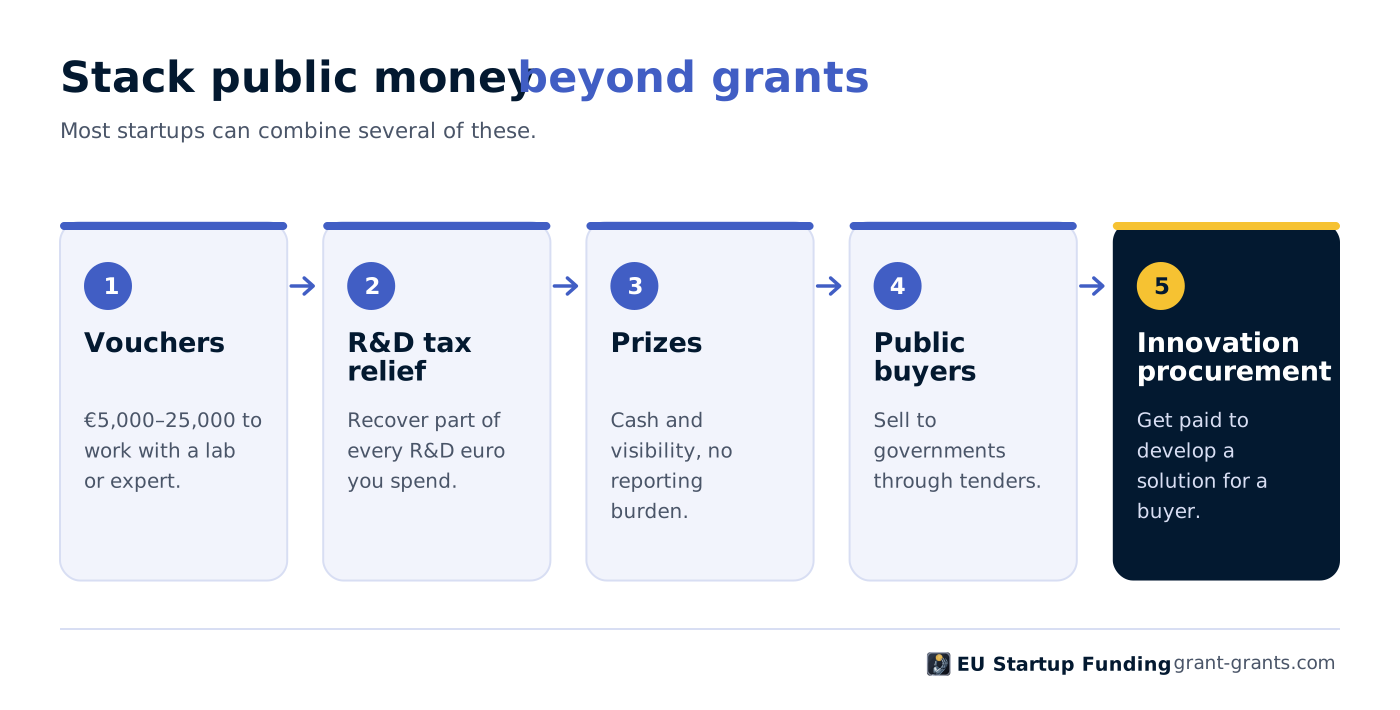
- Claim R&D tax relief on everything that qualifies, every year; keep timesheets and project descriptions from day one.
- Use vouchers to test ideas cheaply with research partners.
- Combine with grants carefully. Costs funded by a grant often can't also be claimed for tax relief; check the rules and state aid limits in state aid rules for grants.
- Treat public buyers as customers: start with smaller national tenders, then innovation procurement calls.
- Check VAT and tax treatment of each source; see VAT treatment of EU grants.
Build the business case funders and buyers look for
The Fe/male Switch startup game helps you develop your offer, market analysis and pitch, with an AI co-founder guiding each step.
👉 Start the game
Conclusion: the quiet money is often the easiest
R&D tax incentives, innovation vouchers, public procurement and prizes don't make headlines like grants, but together they're worth far more to most startups. Tax relief returns a share of every R&D euro without competition, vouchers buy expert help quickly, and public buyers spend hundreds of billions a year. Ask your accountant about R&D tax relief this year, look for a voucher for your next technical step, and register on your country's tender portal.
FAQ: funding opportunities beyond grants
What funding is available for startups besides grants?
R&D tax incentives, innovation vouchers, public procurement contracts, innovation procurement, prizes, and public loans and equity from promotional banks.
Which European countries have the best R&D tax credits?
For SMEs, Germany's Forschungszulage (35%), Portugal's SIFIDE II (32.5% plus 50% of growth), France's CIR (30%) and Ireland's credit (moving from 30% to 35%) are among the most generous; the OECD names Portugal and Poland among the most generous for profitable SMEs.
Can a loss-making startup benefit from R&D tax incentives?
Yes, in countries that pay out credits in cash, such as Austria's research premium or Denmark's credit for R&D losses; elsewhere you may need to carry the credit forward.
What is an innovation voucher?
A small grant, usually €5,000–25,000, that pays a university or expert to help a company with a technical question, prototype or feasibility study.
Can startups win public tenders?
Yes. SMEs win 71% of contracts under the EU procurement rules, and contracts below the EU thresholds (from €140,000 for central government services) follow simpler national rules.
What is pre-commercial procurement?
A process where public buyers pay several companies to develop competing solutions to a problem before buying the best one; Horizon Europe funds such projects at 100%.
Can I combine R&D tax credits with grants?
Usually, but not for the same costs in many countries, and the total must respect state aid limits. Check each scheme's cumulation rules.
Are prizes taxable?
It depends on the country and on whether the prize relates to your business; ask a tax adviser before you spend it.
