TL;DR: what are the new grants in 2026?
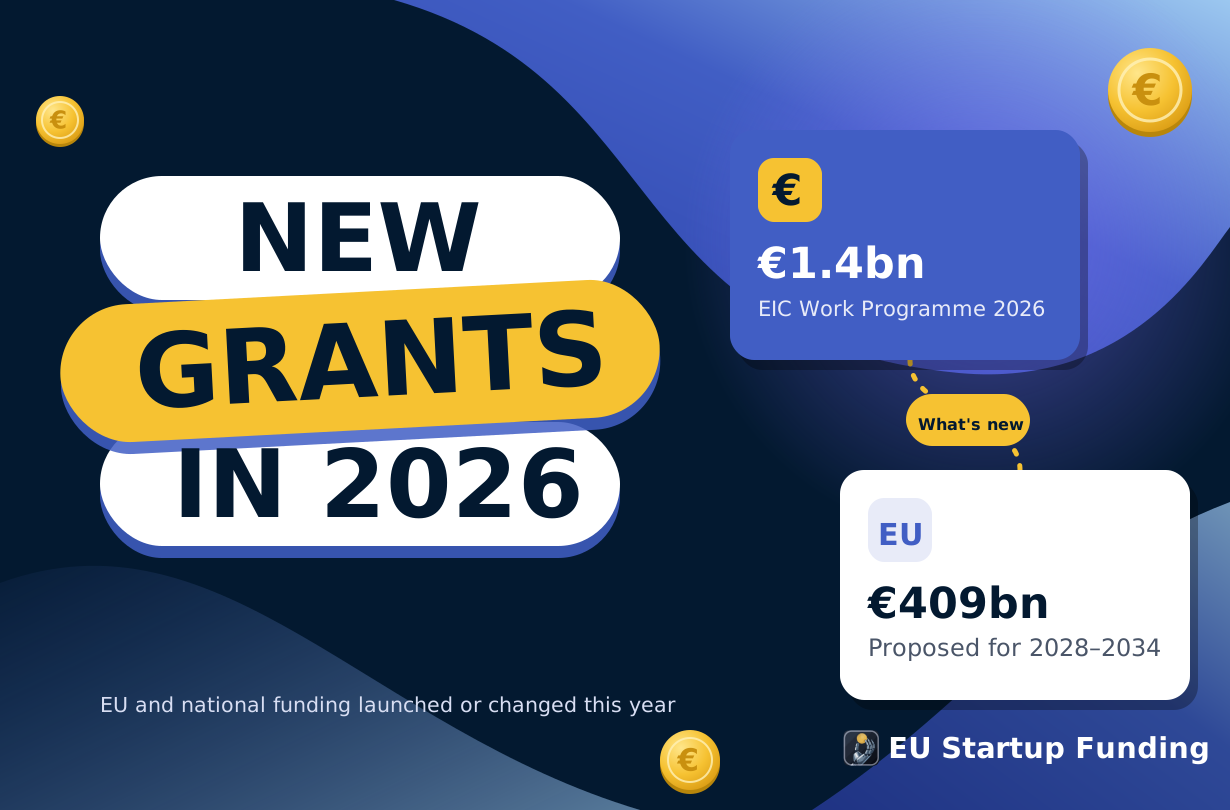
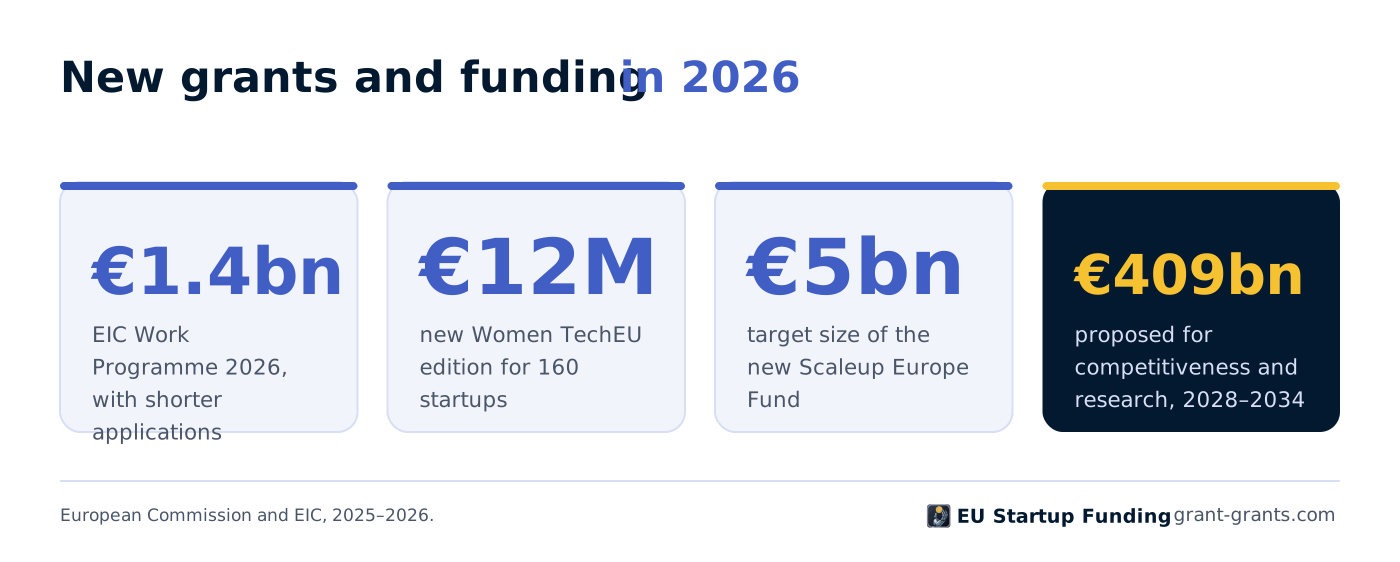
At EU level, the EIC's 2026 work programme (€1.4 billion) cut full Accelerator proposals from 50 to 20 pages and opened investment to small mid-caps; Women TechEU started a new €12 million edition for 160 women-led startups; the Scaleup Europe Fund made its first investment; and a new, simpler Innovation Fund call for SMEs is due to open in December 2026. Nationally, Finland replaced Tempo with the Sprint Grant, Germany launched the Deutschlandfonds, Spain reserved €5 million of NEOTEC for women, and Italy's ON scheme lost its grant share. Recovery fund money ends in 2026, and the next EU budget, from 2028, proposes €409 billion for competitiveness and research. Below: the details and dates.
👉 See every deadline in our 2026–2027 grant calendar
Grant programmes change every year: new instruments appear, rules are simplified, budgets move and some schemes quietly close. If you're planning applications for the next 12 months, the changes matter as much as the programmes themselves. This guide covers the new grants and funding changes of 2026 at EU and national level, what ends this year, and what's coming next.
What's new at EU level in 2026
EIC Work Programme 2026: shorter applications, wider access
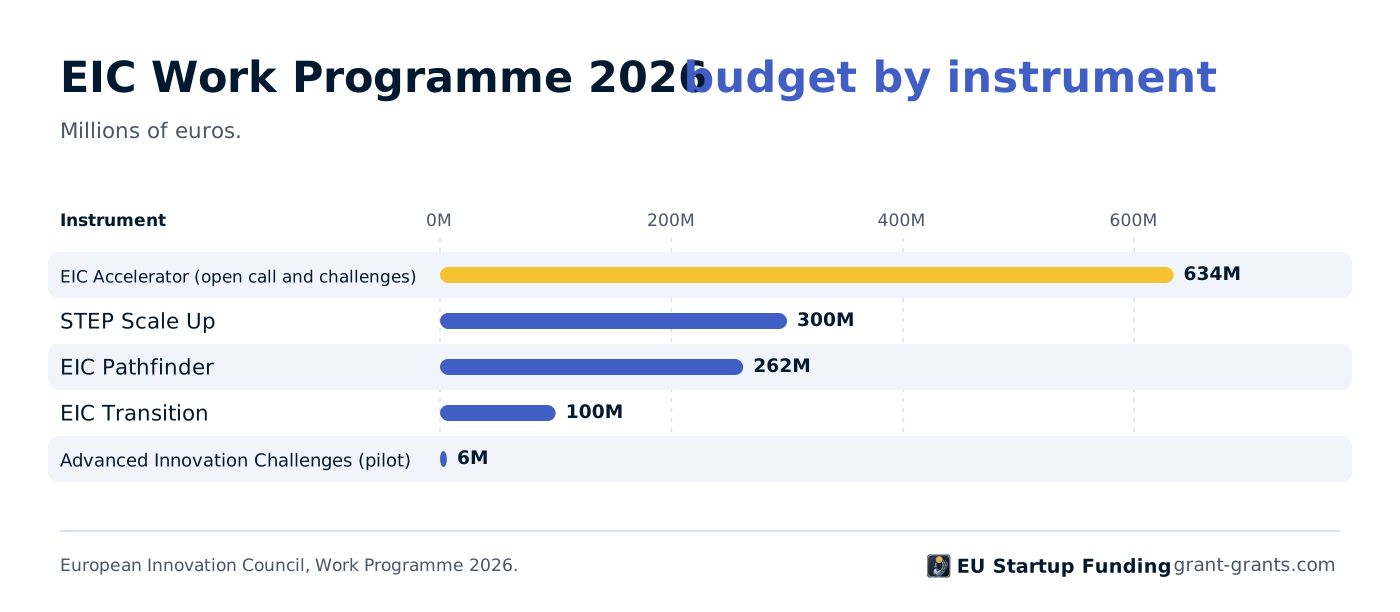
- Budget: over €1.4 billion, including €634 million for the EIC Accelerator, €300 million for STEP Scale Up, €262 million for Pathfinder and €100 million for Transition.
- Shorter proposals: full EIC Accelerator proposals were cut from 50 to 20 pages.
- Small mid-caps: companies with up to 499 staff can now apply to the Accelerator for investment only, according to the European Innovation Council.
- Five Accelerator challenges sharing €220 million: energy-storage materials, fusion, soil biotechnology, critical raw materials and climate adaptation.
- A new pilot: €6 million Advanced Innovation Challenges, giving teams €300,000 lump sums in physical AI and robotics and in new approach methodologies, with up to €2.5 million to follow in 2027.
See our EIC Accelerator guide and STEP scale-up investments. For the sectors the challenges target, see startup ideas where VC money is going.
Women TechEU 2026–2028
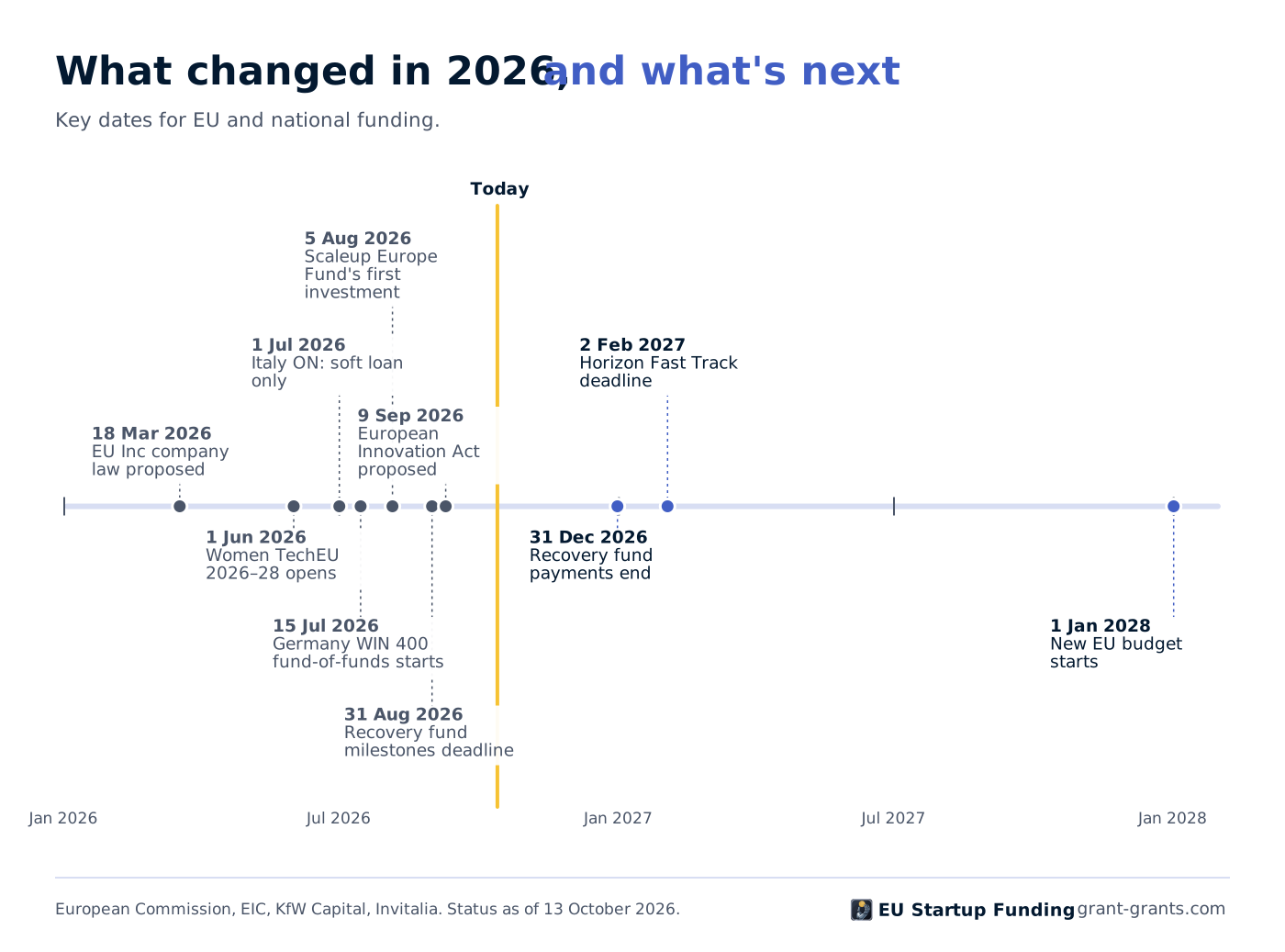
A new edition launched in June 2026 with €12 million for about 160 women-led deep-tech startups, each receiving €75,000 plus coaching, with 40% of the budget reserved for widening countries, according to the EIC. Full-proposal deadlines follow on 14 January, 1 April and 8 July 2027. For more routes, see the funding playbook for female entrepreneurs.
Scaleup Europe Fund
A new fund targeting €5 billion, €1 billion of it from the Commission, for rounds of €100 million and more in European scale-ups. EQT was chosen as manager in May 2026, and the fund made its first investment in August 2026, co-leading ICEYE's Series F, according to the EIC.
A simpler Innovation Fund call for SMEs
The Innovation Fund's net-zero call was massively oversubscribed: 358 bids asked for €17.5 billion against €2.9 billion available, according to the European Commission. For 2026–27 the Commission is adding a separate, simplified call for small clean-tech projects by SMEs, expected to open in December 2026 with deadlines around the end of March and September 2027. See Innovation Fund for climate tech.
Horizon Europe Fast Track and startup hubs
- Fast Track to Research and Innovation: a new open-topic format in the 2026–27 work programme for breakthroughs in industrial technologies, €20 million, deadline 2 February 2027.
- European Startup and Scaleup Hubs: €40 million for two networks of hubs that can pass funding on to companies; the call closes on 5 January 2027.
- AI Factories: EuroHPC AI Factories give AI startups and SMEs free access to computing power, with up to 50,000 GPU hours on the Fast Lane track.
New rules that will change how startups get funded
- EU Inc (the "28th regime"): proposed on 18 March 2026, it would let founders register a company online within 48 hours for a fee of at most €100, with an optional EU-wide employee stock-option scheme, according to the European Commission. It's still being negotiated, with agreement targeted by the end of 2026.
- European Innovation Act: proposed on 9 September 2026, with an EU framework for valuing intellectual property, an IP marketplace and joint procurement of research; the Commission estimates up to €10.2 billion a year in extra financing, according to the Commission.
- State aid: the Clean Industrial Deal state aid framework, adopted in June 2025 and running to 2030, lets countries fund clean-tech projects more easily; so far it has mostly paid for energy-price relief. See state aid rules for grants.
What's ending in 2026
The Recovery and Resilience Facility, which funded many national innovation and digitalisation schemes after the pandemic, ends this year: milestones had to be met by 31 August 2026 and final payments must be made by 31 December 2026, with no extension, according to the European Commission. Expect national schemes funded by it to close.
Some national grants ran out early: Italy's ON scheme for young and women entrepreneurs has offered only its soft loan since 1 July 2026, Estonia's 2026 start-up grant budget was used up by August, and Finland's Tempo funding was replaced by the new Sprint Grant.
New and changed national grants in 2026
For the main grant in each country, see our hub of startup grants in all 27 EU countries, and for Germany and Italy, German startup grants and Italy's Smart&Start.
What's coming: the 2028–2034 EU budget
In July 2025 the Commission proposed a European Competitiveness Fund of €234 billion and a tenth research framework programme (FP10) of €175 billion for 2028–2034, €409 billion in total, according to the European Commission. The European Parliament has asked for €200 billion for FP10 alone, and governments are negotiating the overall budget, aiming for a deal by the end of 2026. The new programmes would start paying out in 2028.
For startups, that means 2027 is the last full year of the current programmes, and the instruments, rules and priorities of the next generation are being decided now.
Get ready for the next deadline
The Fe/male Switch startup game helps you build the business case grant evaluators expect, with an AI co-founder guiding each step.
👉 Start the game
Conclusion: new money, simpler rules, tighter timing
2026 brought shorter EIC applications, investment access for small mid-caps, a new Women TechEU edition, the first investments of the Scaleup Europe Fund and a dedicated Innovation Fund call for SMEs, while recovery-fund schemes wind down and some national budgets ran out early. Check which of these fit your stage, put the 2027 deadlines in your calendar, and watch the next EU budget negotiations: they will shape European grants from 2028.
FAQ: new grants in 2026
What new EU grants are available in 2026?
The EIC's 2026 work programme with shorter Accelerator applications and five new challenges, the 2026–28 Women TechEU edition (€75,000 grants), the Advanced Innovation Challenges pilot, Horizon Europe's new Fast Track topics and, from December 2026, a simplified Innovation Fund call for SMEs.
What changed in the EIC Accelerator in 2026?
Full proposals were cut from 50 to 20 pages, and small mid-caps with up to 499 employees can now apply for investment only. The grant remains up to €2.5 million, with equity of €1–10 million.
Is the Recovery and Resilience Facility ending?
Yes. Milestones had to be met by 31 August 2026 and final payments must be made by 31 December 2026, with no extension, so national schemes it funds will close.
What is the Scaleup Europe Fund?
A new fund targeting €5 billion, managed by EQT, that invests €100 million or more in European scale-ups; its first investment was in ICEYE in August 2026.
What is EU Inc?
A proposed EU-wide company form that would let founders register online within 48 hours for at most €100, with an EU-wide stock-option scheme. It was proposed in March 2026 and is still being negotiated.
Which national grants changed in 2026?
Finland's Sprint Grant replaced Tempo, Germany launched the Deutschlandfonds, Spain reserved €5 million of NEOTEC for women, the Netherlands lowered the MIT feasibility rate to 35%, and Italy's ON scheme became loan-only.
What happens to EU grants after 2027?
A new EU budget for 2028–2034 is being negotiated. The Commission proposed €409 billion for a European Competitiveness Fund and FP10, the successor to Horizon Europe.
Where can I see upcoming grant deadlines?
See our grant deadlines calendar for October 2026 to September 2027, and the EU Funding & Tenders Portal for every EU topic.
