TL;DR: what is search funding?
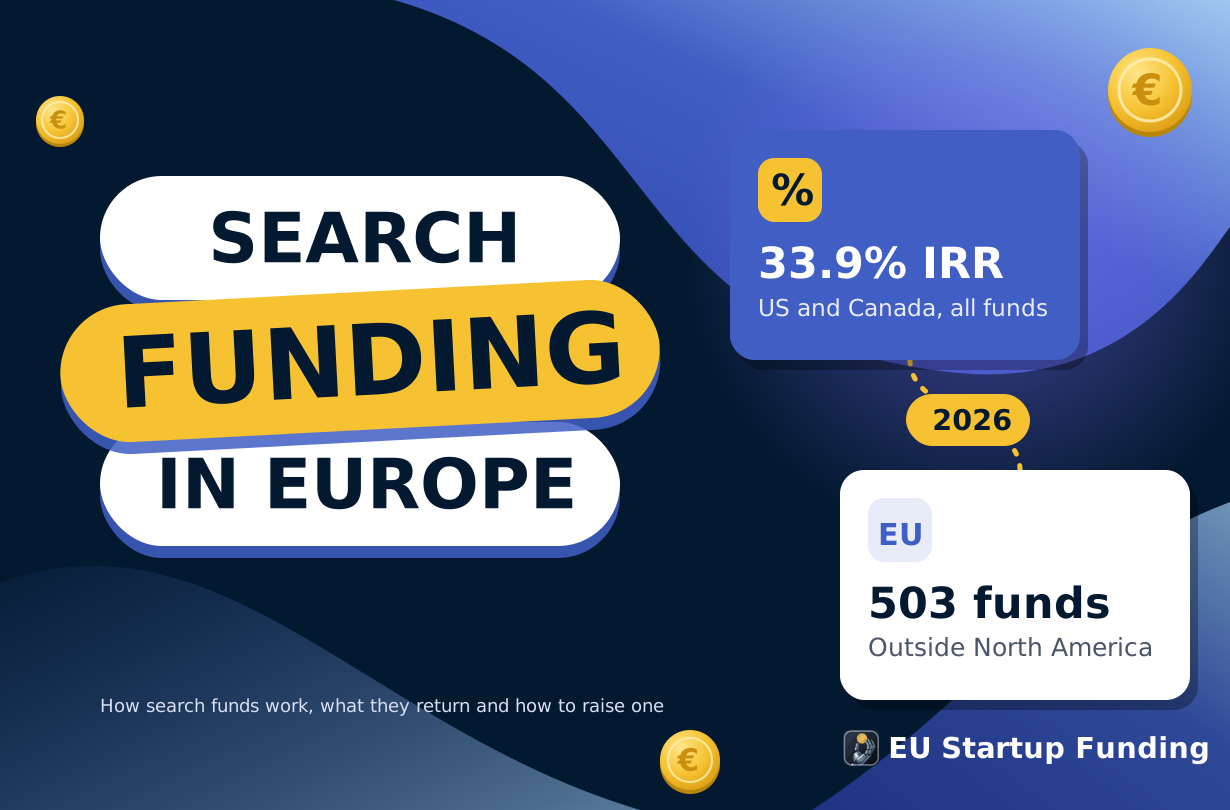
A search fund lets an aspiring entrepreneur raise money from investors to find, buy and run one established small company, instead of starting from scratch. The searcher raises about $400,000–600,000 to search for two years, investors fund the acquisition, and the searcher earns up to 25–30% of the equity as CEO. US and Canadian search funds have returned 33.9% a year in aggregate, but 42% of searches never buy a company and about a quarter of acquisitions lose money. Europe is the fastest-growing region, led by Spain, the UK, France and Germany, and a wave of retiring owners is creating supply. Below: how it works, the numbers, the European ecosystem and how to finance a deal.
👉 Read why buying a business can beat starting one
Most funding guides assume you'll start a company. Search funding is the opposite: you raise money to buy one. It's a well-established model in the US, taught at business schools for decades, and it's growing fast in Europe, where hundreds of thousands of business owners are approaching retirement without a successor.
This guide explains how search funds work, what they return, how the European ecosystem looks and how deals are financed. For the bigger picture of buying rather than starting a business, see our guide to the best businesses to buy instead of start.
What is a search fund?
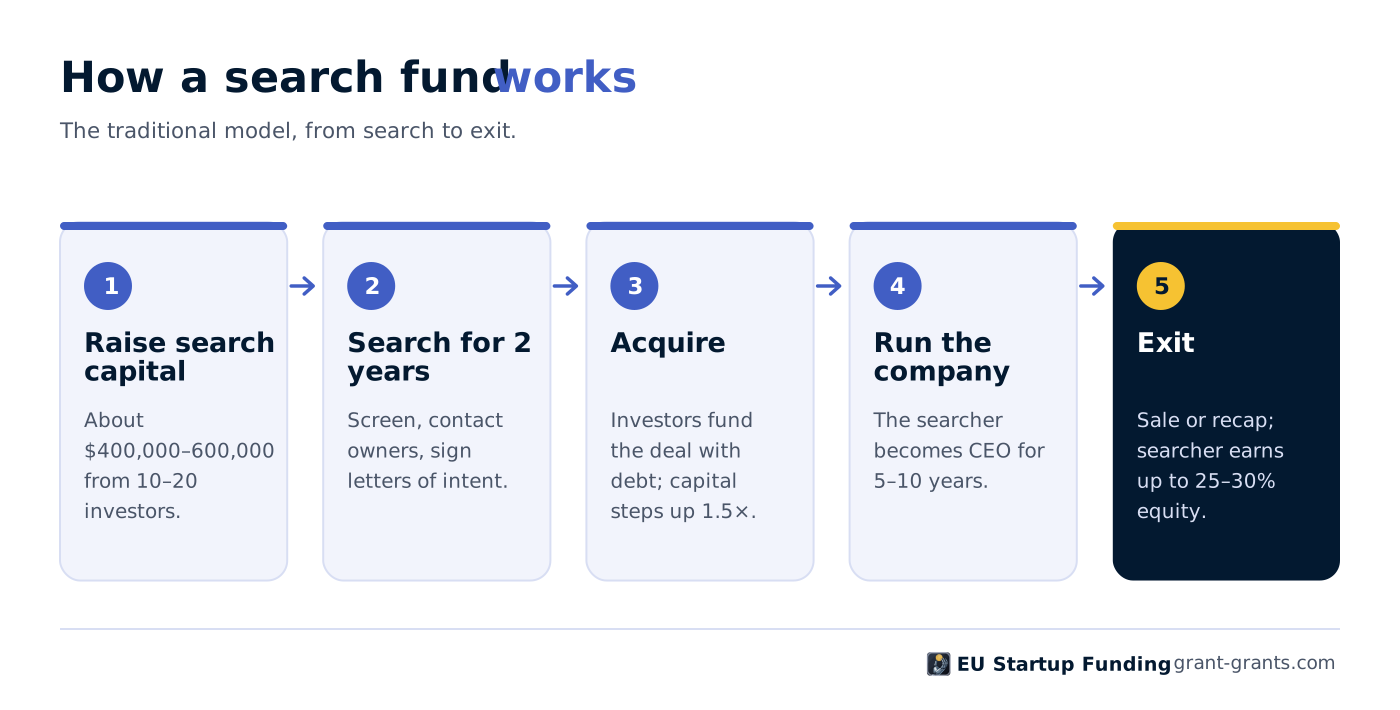
In a traditional search fund, one or two entrepreneurs, often recent business-school graduates, raise "search capital" from a group of investors to pay a salary and costs while they look for a company to buy. When they find one, the same investors get the option, not the obligation, to fund the acquisition. The searcher then becomes CEO and runs the company for several years, according to Stanford's search fund primer.
Three types of search
Sources: Stanford primer and the Yale note on search fund structures.
The economics of a search fund
- Search capital: a median of $550,000 per searcher and $600,000 per fund from 13 investors in 2024–25 in the US and Canada; a median of $456,000 per fund internationally in 2022–23.
- Step-up: search investors usually receive 150% of their search capital as equity credit when a company is bought.
- Searcher equity: up to 25% for one searcher or 30% for two, earned in three parts: at acquisition, over about four years of service, and when investor returns pass hurdles of around 20–35% a year.
- Typical deal: in the US and Canada, a median price of $16 million at 6.2 times EBITDA in 2024–25, for a company with $8.1 million revenue and 30 employees; internationally, a median of $11.7 million at 5.7 times EBITDA with 50 employees.
- Time: a median of 20 months to acquire, often after several letters of intent.
Returns and risks
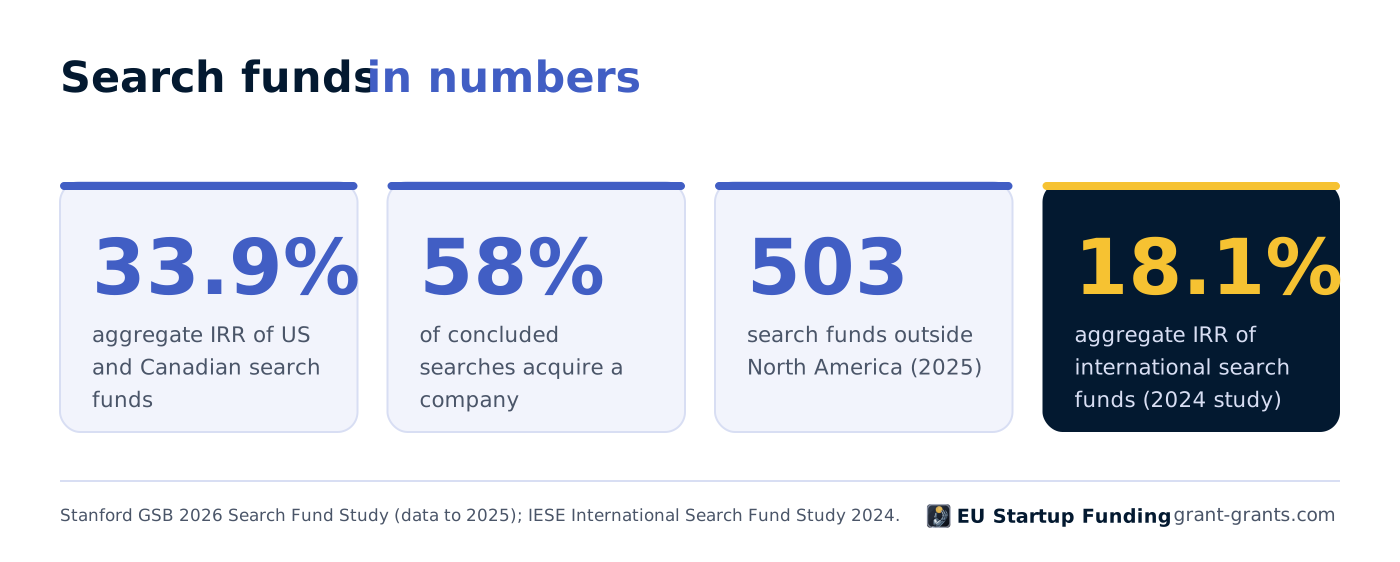
Across 862 US and Canadian search funds since 1984, the aggregate return was 33.9% a year and 4.75 times invested capital, according to the Stanford 2026 Search Fund Study. But returns are concentrated: without funds that returned 10 times or more, the return falls to 27% and 2.8 times.
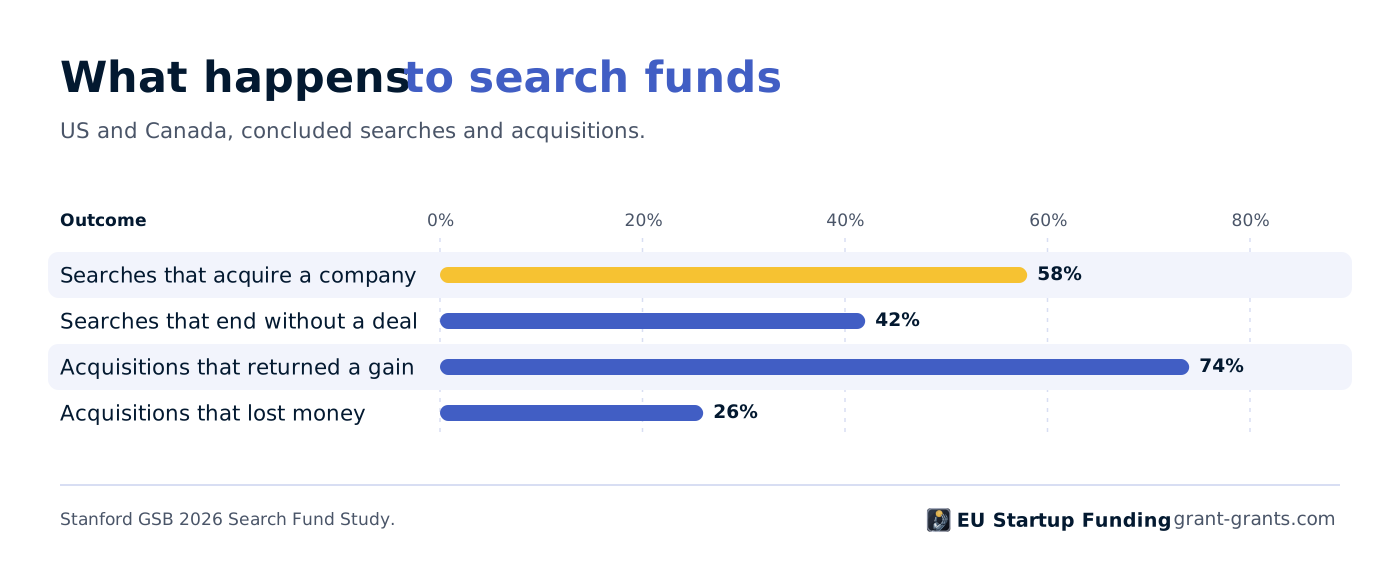
For the searcher, the main risk is spending two years without finding a company: 42% of concluded searches ended without an acquisition, and 52% for funds launched in 2021–24. About a quarter of acquisitions lost money for investors. Outside North America, the 2024 IESE study found an aggregate return of 2.0 times and 18.1% a year, with 26% of acquisitions showing a loss, according to IESE Business School.
Search funds in Europe
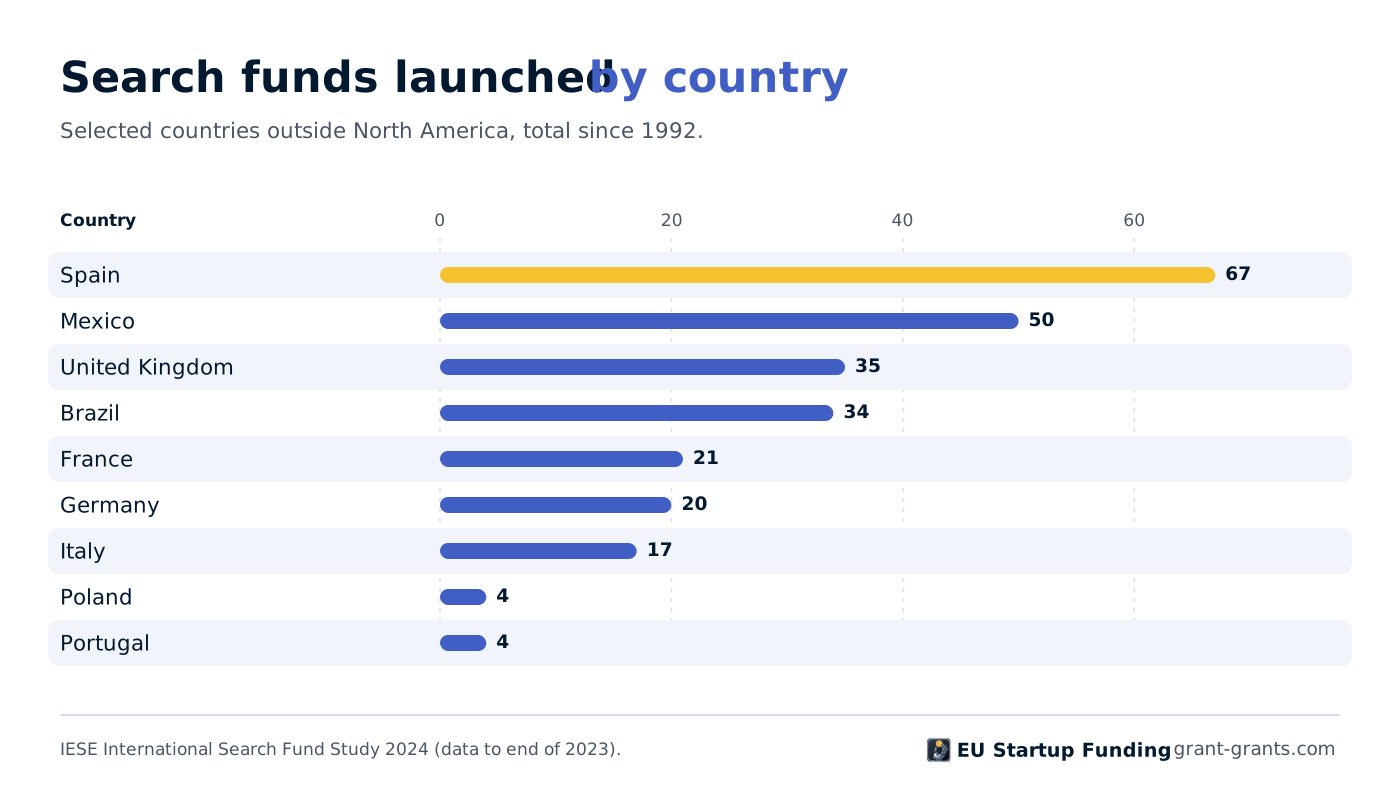
Europe is where the model is growing fastest outside North America. By the end of 2025 there were 503 known international search funds, with 190 new funds and 77 acquisitions in 2024–25 alone, much of the growth in Europe, according to Stanford. Spain leads with 67 funds since 1992, followed by the UK (35), France (21), Germany (20) and Italy (17); 85 of the 146 international acquisitions by 2023 were in Europe, according to IESE.
- Research and training: the IESE International Search Fund Center in Barcelona runs the international study, a biennial conference (October 2026) and a bootcamp; London Business School and INSEAD teach entrepreneurship through acquisition.
- Investors: specialist search fund investors such as Relay Investments and Vonzeo Capital invest internationally, alongside former searchers and private investors.
- Pay: the median European searcher salary was $90,000 in the IESE study.
Why now: Europe's succession wave
About 545,000 German SMEs plan a handover by the end of 2029, while 569,000 owners plan to close for lack of a successor, according to KfW Research. In France, 370,000 firms are expected to change hands by 2030, but only about 130,000 would at today's pace, according to Bpifrance. Many of these are exactly the profitable, stable companies search funds look for. For the full picture, see the best businesses to buy in Europe.
How search fund acquisitions are financed
Deals combine investor equity with debt: seller notes, bank loans and private credit, plus earn-outs to bridge price gaps. Public lenders can help:
- Germany: the KfW ERP-Förderkredit Gründung und Nachfolge lends up to €500,000 per applicant for business takeovers, up to 35% of costs, over up to 15 years.
- France: Bpifrance's Prêt Transmission lends €40,000–1.5 million for buying a company, with no guarantee on personal assets, alongside a bank loan.
- Elsewhere: national promotional banks offer acquisition loans and guarantees; see European funding beyond grants and bank loans and debt financing.
Search funds sit between bootstrapping and venture capital: you give up most of the equity, but you start with a profitable company. See venture capital versus grants and equity dilution versus grants.
Is search funding right for you?
- You want to run a company, not invent one, and you're ready to lead an existing team.
- You have management experience or a strong business education; 80% of US searchers have an MBA.
- You can live on a modest salary for two years with no guarantee of a deal.
- You can raise from 10–20 investors, or fund a smaller self-funded search yourself.
- You're committed for 5–10 years as CEO after the acquisition.
Only 14% of US and Canadian searchers in 2024–25 were women, which leaves room for change; see the funding playbook for female entrepreneurs and exit strategies for bootstrapped founders.
Learn to run a company before you buy one
The Fe/male Switch startup game lets you practise the decisions of a CEO in weekly quests, with an AI co-founder at your side.
👉 Start the game
Conclusion: buy a company with other people's money
Search funding turns the usual startup path around: investors back you to find and buy a profitable small company, and you earn a large stake by running it well. Historically, returns have been high, but they're concentrated, and many searches never close a deal. In Europe, a growing ecosystem led by Spain, the UK, France and Germany, and a wave of retiring owners, make 2026 a good time to consider it, if you're ready for a two-year search and a long commitment as CEO.
FAQ: search funding
What is a search fund?
A vehicle in which investors fund an entrepreneur to search for, acquire and run one established private company. The searcher becomes CEO and earns a significant equity stake.
How much does a search fund raise?
Search capital is typically $400,000–600,000 to cover a two-year search; the acquisition is funded separately, often with $5–10 million of investor equity plus debt.
How much equity does a searcher get?
Up to about 25% for a solo searcher or 30% for a pair, earned in three tranches: at acquisition, over time, and when investors' returns pass agreed hurdles.
What returns do search funds make?
US and Canadian search funds returned 33.9% a year and 4.75 times capital in aggregate (Stanford 2026); international funds 18.1% and 2.0 times (IESE 2024).
What are the risks of a search fund?
About 42% of searches end without an acquisition, and roughly a quarter of acquired companies lose money for investors.
Are there search funds in Europe?
Yes, and the number is growing fast: Spain has had 67, the UK 35, France 21, Germany 20 and Italy 17 since 1992, according to IESE.
What is a self-funded search?
A search paid for by the entrepreneur, without investor salary, usually targeting smaller companies financed with bank and seller debt; the searcher can keep up to 100% of the equity.
Can I get a loan to buy a business in Europe?
Yes: for example KfW in Germany lends up to €500,000 for takeovers and Bpifrance's Prêt Transmission €40,000–1.5 million in France.
