TL;DR: how is a grant application scored?
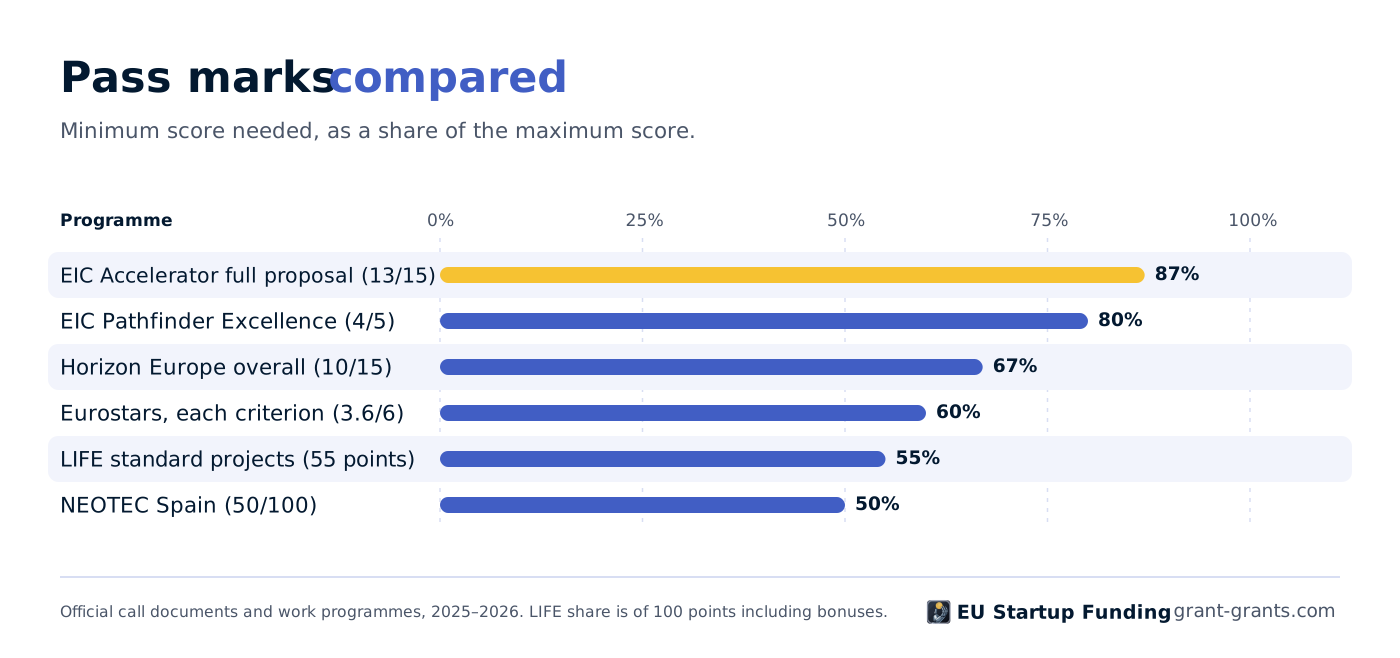
Against fixed criteria, by independent experts, with thresholds you must pass. In Horizon Europe, at least three experts score Excellence, Impact and Implementation from 0 to 5 in half points; you need 3 on each and 10 overall, and innovation actions weight Impact by 1.5 for ranking. The EIC Accelerator is stricter: 4 out of 5 on each criterion and 13 out of 15 overall, then a jury interview. Eurostars, LIFE, the Innovation Fund and national schemes like Spain's NEOTEC each use their own scales. Passing isn't enough: only about 30% of high-quality Horizon proposals were funded. Below: every scoring system, what evaluators are told, and how to write for the score sheet.
👉 Compare which European grants are worth applying for
Most applicants write a grant application as if it were a business plan or a pitch. Evaluators read it differently: with a score sheet, a set of criteria and instructions on what to reward and what to penalise. Knowing exactly how your application will be scored is the single most useful thing you can learn before you write.
This guide explains the scoring systems of Europe's main grant programmes, using the official evaluation rules. For the process as a whole, see the grant review process explained and how to think like a grant reviewer.
Grant scoring systems compared
Horizon Europe: three criteria, scored 0 to 5
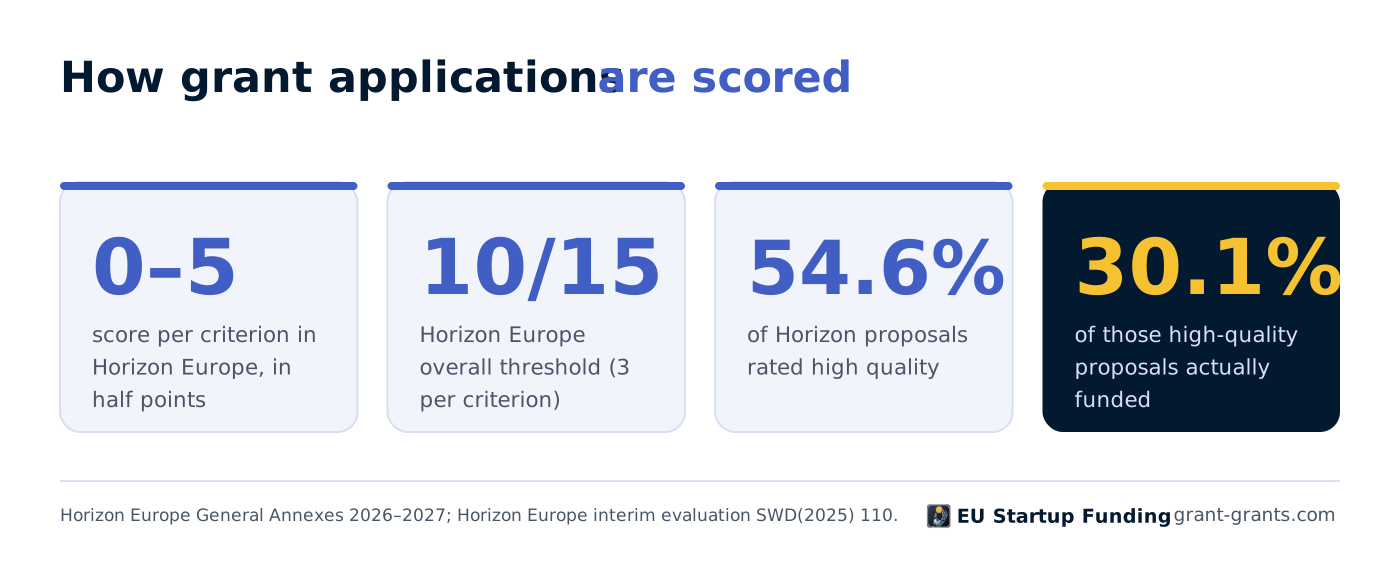
Every Horizon Europe proposal is scored on Excellence, Impact, and Quality and efficiency of the implementation. Full proposals need at least 3 out of 5 on each criterion and 10 out of 15 overall. For innovation actions, Impact is weighted 1.5 to rank proposals, though not to decide whether they pass, according to the Horizon Europe general annexes. In two-stage calls, stage 1 scores only Excellence and Impact, with a threshold of 4 on each.
When proposals tie, the call's priorities decide first: proposals covering parts of the call not yet covered come first, then the Excellence score (Impact first for innovation actions), then gender balance among researchers in leading roles, then geographical diversity.
EIC Accelerator: GO, score, then interview
- Short proposal: four evaluators each give a GO or NO GO; with at least three GOs you're invited to submit a full proposal.
- Full proposal: one external technology expert, who also meets you online, plus a panel of at least three experts agree a score. You need 4 out of 5 on Excellence, Impact, and Risk, implementation and need for EU support, and 13 out of 15 overall, according to the EIC Work Programme 2026.
- Interview: enough top proposals to request about 2.5 times the budget are invited; ties go to female-led companies.
- Jury decision: GO for funding, or NO GO with a Seal of Excellence. Proposals that pass the thresholds but aren't invited also get a Seal.
- Three strikes: after three unsuccessful submissions, you can't apply again under Horizon Europe.
EIC Pathfinder works differently: Excellence carries 50% of the weight, Impact 30% and Implementation 20%, with thresholds of 4, 3.5 and 3. See our EIC Accelerator guide.
Eurostars, LIFE, the Innovation Fund and national grants
- Eurostars: three remote experts, who must not share a nationality with any partner, score 13 sub-criteria from 1 to 6. Each criterion's average must be at least 3.6, and a panel of 10–14 experts then places the best applications in groups 1 to 6; group 6 is funded automatically, according to Eureka. Every partner must also pass a national financial viability check.
- LIFE: relevance, impact, quality and resources are each scored out of 20 with a minimum of 10; impact is weighted 1.5, up to five bonuses of 2 points apply, and the overall threshold is 55, according to the LIFE 2026 call document.
- Innovation Fund: points for innovation, greenhouse-gas avoidance, project maturity, replicability and cost efficiency, with minimums per sub-criterion but no overall threshold, according to the Innovation Fund call.
- Spain's NEOTEC: technology and innovation (30 points, threshold 21), commercial plan (30, threshold 15), team (30, threshold 15) and impact (10), with 50 points overall; a score of 65 earns a NEOTEC seal that can unlock regional funding, under the ministerial order. See Spain's NEOTEC programme.
What evaluators are told to do
The Commission's standard briefing for experts sets the rules every Horizon Europe evaluator follows:
- Score the proposal as submitted, not its potential if changes were made, and don't make recommendations.
- No assumptions: if something isn't written, it doesn't count.
- Shortcomings have defined weights: a minor shortcoming doesn't lower the score, a shortcoming does, and a significant weakness pushes it below the threshold.
- No double penalties: a weakness is penalised under one criterion only.
- Resubmissions: if your proposal was evaluated in the last two years, evaluators must justify scores that differ significantly from the earlier report.
- Confidentiality: evaluators are warned that generative AI tools may breach confidentiality, and stage 1 of two-stage calls is blind.
Passing is necessary but not sufficient: 54.6% of Horizon Europe proposals were rated high quality, but only 30.1% of those could be funded, according to the Commission's interim evaluation.
How to write for the score sheet
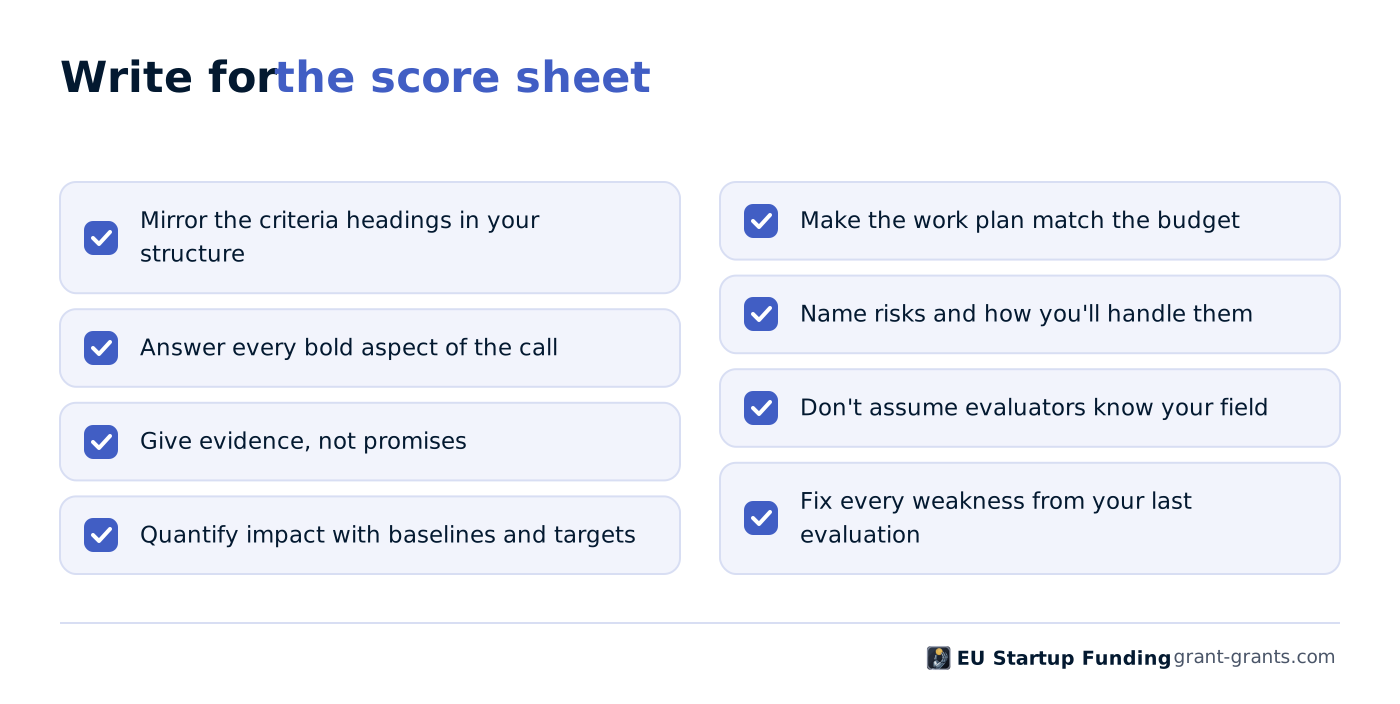
- Use the criteria as your structure. Evaluators score criterion by criterion; make each answer easy to find.
- Write for a smart non-specialist. Evaluators can't assume what you didn't write; see writing a compelling project narrative.
- Quantify impact with baselines, targets and the path between them; see outcomes and impact measurement.
- Show you've thought about risk with a concrete mitigation plan; see risk assessment and mitigation plans.
- Use your last evaluation report. Address every weakness explicitly; see reapplying after rejection.
- Lead with a clear summary; see executive summaries for grant proposals.
Build the evidence evaluators score
The Fe/male Switch startup game helps you validate your market, quantify impact and plan your team, the evidence behind high scores.
👉 Start the game
Conclusion: write to the criteria, not to impress
Every European grant is scored against published criteria with clear thresholds: 3 per criterion and 10 overall in Horizon Europe, 4 and 13 in the EIC Accelerator, 3.6 out of 6 in Eurostars, 55 points in LIFE. Evaluators score what's written, penalise each weakness once and can't assume what you meant. Read the call's criteria and scoring rules before you write, structure your application around them, and treat your last evaluation report as a to-do list.
FAQ: grant application scoring
How are Horizon Europe proposals scored?
At least three independent experts score Excellence, Impact and Implementation from 0 to 5, in half points. You need at least 3 on each and 10 out of 15 overall; innovation actions weight Impact by 1.5 for ranking.
What score do I need for the EIC Accelerator?
At full proposal stage, at least 4 out of 5 on each of the three criteria and 13 out of 15 overall, before an interview with the jury.
How many evaluators read my proposal?
At least three in Horizon Europe and Eurostars, often more; four for the EIC Accelerator short proposal, plus a technology expert and a panel for the full proposal.
What does a score of 3 mean in Horizon Europe?
"Good": the proposal addresses the criterion well but with a number of shortcomings. A 4 means very good with a small number of shortcomings, and 5 means any shortcomings are minor.
Is a proposal above the threshold always funded?
No. Only about 30% of high-quality Horizon Europe proposals were funded in 2021–2024 because of limited budgets; the rest may receive a Seal of Excellence.
How is a Eurostars application scored?
Three experts score 13 sub-criteria from 1 to 6; each criterion's average must be at least 3.6, and a panel then groups the best applications for national funding.
Can I see why my application was rejected?
Yes. EU programmes send an Evaluation Summary Report with scores and comments for each criterion; use it to improve a resubmission.
Do evaluators use AI?
The Commission warns evaluators that generative AI tools may breach confidentiality, so evaluation relies on the experts' own reading.
